



Introduction
In today’s era of environmental consciousness and sustainable development, the need for renewable energy sources has become more urgent than ever before. Among the many green fuels available, Compressed Biogas (CBG) has emerged as one of the most promising and practical solutions. It offers a dual advantage — managing organic waste efficiently and producing a clean, renewable fuel that can replace conventional fossil fuels like diesel and LPG.
Setting up a small-scale CBG plant not only contributes to the country’s clean energy mission but also opens up multiple avenues for rural development and entrepreneurship. Let’s explore in detail how you can establish your own CBG plant — from understanding the science behind it to the financial, environmental, and regulatory aspects that define its success.
Understanding Compressed Biogas (CBG)
Compressed Biogas, commonly known as CBG, is a purified and compressed version of biogas — a natural gas produced from the anaerobic digestion of organic waste materials. In simple terms, when organic matter such as agricultural residue, animal dung, or food waste decomposes in the absence of oxygen, it produces a mixture of gases — mainly methane (CH₄) and carbon dioxide (CO₂).
To make it usable as a fuel, this raw biogas is purified to remove impurities such as carbon dioxide, hydrogen sulfide, and moisture. The resulting gas, rich in methane (90–95%), has similar properties to Compressed Natural Gas (CNG) and can be used as a substitute for vehicular fuel, power generation, or industrial energy requirements.
CBG has several unique benefits. It burns cleanly without leaving carbon deposits, significantly reduces greenhouse gas emissions, and utilizes waste that would otherwise pollute the environment. This makes it both an eco-friendly and economically viable alternative energy source.
Raw Materials for CBG Production
The foundation of any CBG plant lies in its feedstock — the organic material used to produce biogas. A small-scale CBG plant can run efficiently on easily available local materials. Common feedstocks include cow dung, agricultural residues, sugarcane press mud, poultry waste, and food waste from hotels or vegetable markets.
For rural areas, cattle dung and crop residues are ideal due to their abundance and consistency. In urban or semi-urban areas, food waste and vegetable market residues can be excellent feedstocks, helping cities manage waste sustainably.
Each type of feedstock has a different biogas yield. For example, one ton of cow dung can produce approximately 40–50 cubic meters of biogas, while food waste can yield nearly 100–120 cubic meters per ton. Therefore, selecting a steady and easily available feedstock source is crucial for smooth operation and consistent production.
Essential Components of a CBG Plant
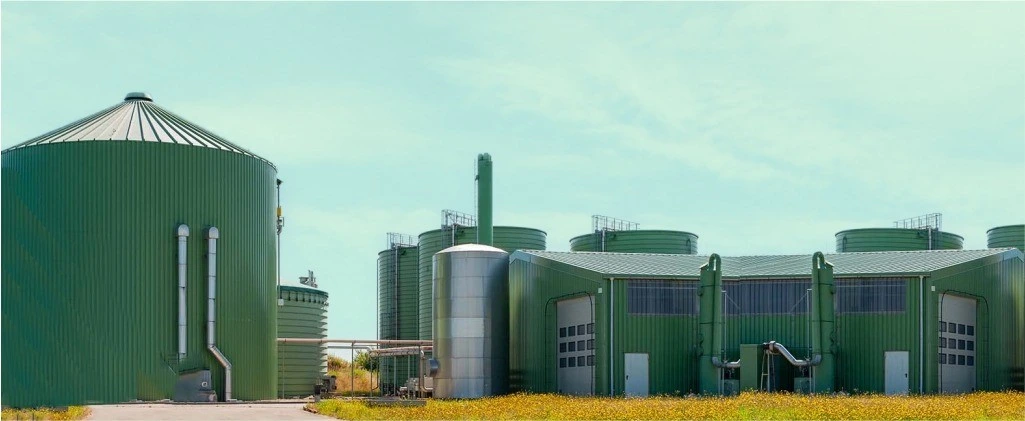
A small-scale CBG plant is made up of several integrated units, each playing a critical role in gas production and purification. The process begins with a feedstock handling unit, where organic waste is collected, crushed, and mixed with water to form a slurry. This mixture is then fed into the anaerobic digester, an airtight tank where microbial action takes place. Over several days, bacteria break down the organic material to produce biogas.
The produced gas passes through a purification system, which removes impurities like carbon dioxide, hydrogen sulfide, and moisture. The purified methane-rich gas is then transferred to a storage unit, from where it is compressed into cylinders at 200–250 bar pressure for transport or direct use.
The leftover digested material, called bio-slurry, is a valuable by-product. It can be dried or processed into organic fertilizer, providing farmers with a natural soil enhancer and creating an additional income stream.
Planning and Setting Up the Plant
The process of setting up a CBG plant begins with a thorough feasibility study. This involves evaluating the local availability of feedstock, nearby markets for gas and fertilizer, and the logistics of collecting and transporting materials. The study also assesses financial feasibility, expected returns, and possible challenges.
After the feasibility analysis, the next step is selecting a suitable site. The ideal location should have easy access to feedstock, water, and electricity. It should also be connected to roads for raw material delivery and CBG distribution. The site should comply with local environmental and safety norms, usually requiring a buffer distance from residential areas.
Once the site is finalized, the plant layout and technology selection come into play. Small-scale plants often use fixed-dome or floating-drum digesters, while more advanced setups opt for Continuous Stirred Tank Reactors (CSTR) or Plug Flow Reactors. The choice depends on the type of waste, budget, and desired gas output.
Procurement of equipment follows — this includes the digester, purification system, compressors, and gas storage units. It’s advisable to source equipment from reputed biogas technology providers who can offer after-sales support, warranties, and guidance for smooth commissioning. Typically, a small-scale CBG plant can be constructed and made operational within four to six months after all permits and materials are in place.
Government Approvals and Legal Requirements
Before starting operations, it’s essential to secure the necessary government approvals. Key permissions include:
- No Objection Certificate (NOC) from the State Pollution Control Board (SPCB)
- Land use and building clearance from local authorities
- Factory license and safety clearance from respective departments
- MNRE registration, if applying for subsidies under renewable energy programs
Entrepreneurs looking to sell their gas to Oil Marketing Companies (OMCs) like IOCL, HPCL, or BPCL must also register under the SATAT Scheme (Sustainable Alternative Towards Affordable Transportation), which provides assured gas offtake and attractive pricing.
Investment, Costs, and Expected Returns
The cost of setting up a small-scale CBG plant varies depending on capacity and technology. A basic 100 kg/day output plant may require an investment of ₹30–40 lakh, while a 500 kg/day unit could cost between ₹70–90 lakh. This includes expenses on civil works, equipment, purification systems, gas compression, and labor.
Operational costs cover feedstock procurement, labor, electricity, and maintenance. Despite the initial investment, CBG plants are financially attractive because of multiple revenue streams. Apart from selling CBG to fuel stations or industries, the bio-slurry can be sold as organic fertilizer, further increasing profitability.
With efficient management and proper off-take agreements, most plants achieve payback within 3 to 4 years. The return on investment improves if the plant utilizes waste from the entrepreneur’s own farm or facility, reducing feedstock costs.
Government Subsidies and Financial Support
To promote biogas as a mainstream fuel, the Government of India offers several financial incentives and subsidy schemes. The Ministry of New and Renewable Energy (MNRE) provides Central Financial Assistance (CFA) covering up to 30% of the project cost, depending on size and technology.
Additionally, under the SATAT Scheme launched by the Ministry of Petroleum and Natural Gas (MoPNG), entrepreneurs can sign offtake agreements with OMCs. This guarantees that the gas produced will be purchased, reducing market risk.
Many state governments also provide additional subsidies, such as land lease discounts, electricity rebates, and tax concessions. Banks and financial institutions categorize CBG projects under Priority Sector Lending (PSL), allowing easier access to low-interest loans. Together, these supports make small-scale CBG projects more financially viable and less risky for new entrepreneurs.
Also Read – Government Subsidies for CBG Plants in India: Powering the Green Energy Revolution
Environmental and Socio-Economic Benefits
Beyond financial gains, setting up a CBG plant offers immense environmental and social advantages. It helps reduce greenhouse gas emissions, prevents open dumping of organic waste, and promotes cleaner air. Every ton of waste converted to CBG prevents methane release that would otherwise occur from natural decomposition.
The bio-slurry, when used as fertilizer, rejuvenates soil fertility and reduces dependence on chemical fertilizers, promoting sustainable agriculture.
From a social perspective, CBG plants generate local employment in waste collection, transportation, and plant operations. They also empower farmers by creating a circular economy — where waste from farms becomes fuel, and the residue returns as organic manure. Thus, CBG technology strengthens both environmental protection and rural livelihoods.
Challenges and Practical Solutions
Like any renewable energy project, small-scale CBG plants face challenges. Irregular feedstock supply, lack of technical expertise, and high initial costs are among the common hurdles. However, these can be managed effectively through proper planning.
Entrepreneurs should establish long-term feedstock agreements with nearby farms, dairies, or municipal bodies to ensure steady raw material flow. Partnering with technology providers or research institutions can help in training staff and optimizing plant performance. To overcome financial constraints, one can combine bank loans, government subsidies, and venture partnerships for capital support.
By focusing on quality, efficiency, and proper waste management, these challenges can be turned into manageable tasks rather than obstacles.
Conclusion
Setting up a small-scale Compressed Biogas (CBG) plant is far more than just a business opportunity — it is a direct contribution toward a cleaner, greener, and self-reliant India. At a time when the world is battling the dual challenge of rising energy demands and environmental degradation, CBG offers a realistic and sustainable solution that addresses both issues simultaneously.
By converting organic waste into high-quality fuel, a CBG plant not only reduces greenhouse gas emissions but also helps manage waste that would otherwise end up polluting land and water bodies. This circular process — where waste becomes energy and the by-product becomes organic fertilizer — perfectly aligns with the government’s “Waste to Wealth” and “Atmanirbhar Bharat” visions.
From an economic perspective, the opportunities are equally promising. Entrepreneurs can generate stable revenue through the sale of CBG and organic manure while contributing to rural employment and local development. Farmers benefit through improved soil health, reduced chemical usage, and an additional market for their crop residues or animal waste. Moreover, the government’s continuous support through MNRE’s Central Financial Assistance and the SATAT scheme ensures that even first-time investors have access to subsidies, soft loans, and guaranteed buyers for their gas.
On a broader scale, each small-scale CBG plant plays a crucial role in strengthening India’s energy security by reducing dependency on imported natural gas and fossil fuels. It helps cities manage organic waste sustainably while empowering villages with decentralized renewable energy systems. The result is a win–win scenario — cleaner cities, empowered rural communities, greener energy, and a healthier planet.
In essence, establishing a CBG plant is not merely about setting up a fuel production unit; it’s about creating a model of sustainable progress. It reflects a vision where economic growth coexists with environmental preservation — where innovation turns waste into value, and local resources power national progress.
With thoughtful planning, reliable technology, and awareness of available government schemes, even a modest CBG project can evolve into a long-term, eco-friendly enterprise that fuels both income and impact. As India moves toward a low-carbon future, small-scale CBG plants will stand as pillars of a new green revolution — one that begins not in factories, but in fields, farms, and communities across the nation.