



Introduction
Compressed Biogas (CBG) projects are increasingly positioned as a strategic solution to address India’s energy security, waste management challenges, and decarbonization goals. As policy support strengthens and market demand for clean gaseous fuels grows, a large number of CBG projects are being conceptualized and implemented across agricultural, industrial, and urban sectors. However, despite strong policy backing and technological maturity, the long-term success of CBG plants cannot be ensured by plant capacity or government incentives alone.
CBG plants are fundamentally different from conventional energy infrastructure. Unlike fossil-fuel-based systems, they are driven by biological conversion processes that depend on feedstock quality, microbial stability, and process consistency. At the same time, they require significant capital investment in digesters, gas upgrading units, compression systems, and auxiliary infrastructure. This dual nature—biological uncertainty combined with capital-intensive engineering—makes CBG projects particularly sensitive to economic planning and financial assumptions.
In many cases, project evaluations focus narrowly on nominal gas production figures or fixed offtake prices, without adequately assessing the underlying cost structure and operational risks. Such approaches often overlook critical variables such as feedstock price volatility, seasonal availability, methane yield variation, parasitic energy consumption, and long-term maintenance requirements. As a result, plants that appear financially attractive at the feasibility stage may experience reduced cash flows, delayed debt servicing, or extended payback periods during actual operation.
A comprehensive economic analysis provides a realistic and integrated view of project viability by linking technical performance with financial outcomes. It connects feedstock behavior, digestion efficiency, plant uptime, and energy balance with capital expenditure (CAPEX) and operating expenditure (OPEX). This linkage allows developers and investors to understand how small deviations in biological or operational performance can significantly impact revenue generation and overall profitability.
Key financial indicators such as CAPEX, OPEX, Internal Rate of Return (IRR), and payback period should therefore be evaluated as interconnected and dynamic parameters, rather than isolated metrics. For example, higher upfront CAPEX may be justified if it leads to lower long-term OPEX and improved plant reliability, thereby enhancing IRR. Similarly, aggressive assumptions on gas yield or feedstock cost can artificially shorten the payback period on paper but increase financial risk in real-world operations.
For lenders and investors, robust economic analysis is essential to assess project bankability, risk exposure, and cash flow stability over the plant’s lifecycle. For EPC companies and developers, it serves as a decision-making tool to optimize design, technology selection, and operational strategies. Ultimately, projects that integrate economic analysis into the earliest stages of feasibility and design are better equipped to withstand operational variability and market uncertainties.
Capital Expenditure (CAPEX): Detailed Cost Structure of a CBG Plant
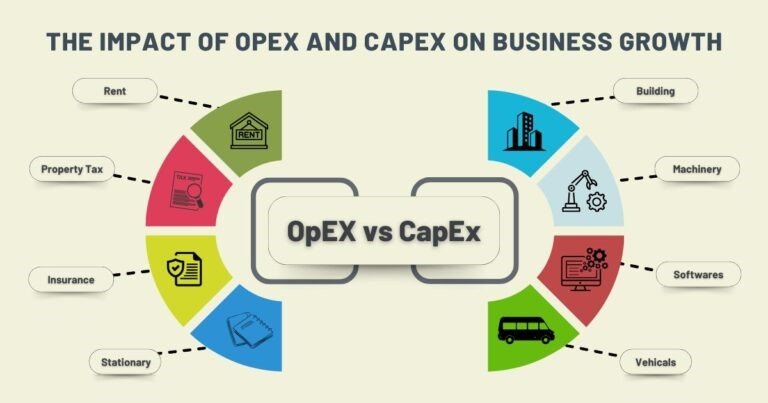
Capital Expenditure (CAPEX) represents the total upfront investment required to design, engineer, construct, install, and commission a Compressed Biogas (CBG) plant. CAPEX decisions have a long-term impact on plant reliability, operating efficiency, and lifecycle cost. In CBG projects, improper CAPEX planning—either through overdesign or underinvestment—often leads to financial stress during operation.
Unlike conventional plants where equipment performance is predictable, CBG plant manufacturers in India deal with biological variability. Therefore, CAPEX must strike a balance between robustness, flexibility, and cost efficiency.
Major CAPEX Components in a CBG Plant
The total CAPEX of a CBG plant can broadly be divided into the following categories:
| CAPEX Component | Typical Share (%) | Economic Significance |
| Civil & Structural Works | 25–30% | Determines plant life, digester integrity |
| Feedstock Handling & Pre-Treatment | 10–15% | Influences digestion stability |
| Anaerobic Digesters & Mixing Systems | 20–25% | Core gas generation asset |
| Biogas Upgradation & Purification | 15–20% | Determines CBG quality & methane recovery |
| Compression, Storage & Dispensing | 10–12% | Enables gas monetization |
| Electrical, Instrumentation & Automation | 5–8% | Impacts reliability & O&M cost |
| Utilities, Safety & Miscellaneous | 3–5% | Regulatory & operational compliance |
Civil & Structural Works
| Sub-Item | Scope | Cost Impact Explanation |
| Digester Civil Construction | RCC tanks, foundations | Largest civil cost driver |
| Feedstock Storage Structures | Silos, pits, sheds | Prevents supply disruptions |
| Equipment Foundations | Compressors, blowers | Reduces vibration & failures |
| Roads & Drainage | Internal logistics | Improves O&M efficiency |
Civil works account for a significant portion of CAPEX because digesters must withstand internal pressure, corrosive environments, and thermal stresses over 20–25 years. Underdesigned civil structures lead to leakage, settlement, and high repair costs, while overdesign inflates CAPEX without proportional benefit.
Feedstock Handling & Pre-Treatment Systems
| Equipment | Purpose | CAPEX Relevance |
| Receiving Hoppers & Conveyors | Controlled feed intake | Prevents digester shock |
| Shredders / Macerators | Particle size reduction | Improves biodegradability |
| Mixing & Slurry Preparation Units | Uniform feed | Ensures stable digestion |
| Contaminant Removal Systems | Plastic, sand removal | Protects equipment |
Investment in pre-treatment systems directly affects digester performance. Insufficient pre-treatment may reduce CAPEX initially but leads to lower gas yield, increased downtime, and higher OPEX.
Anaerobic Digesters & Mixing Systems
| Component | Cost Driver | Explanation |
| Digester Volume | Feedstock TS & HRT | Larger volume = higher CAPEX |
| Mixing Technology | Mechanical / hydraulic | Affects energy consumption |
| Heating Systems | Mesophilic control | Improves methane yield |
| Gas Dome / Cover | Safety & gas capture | Prevents methane losses |
Digesters are the heart of the CBG plant. CAPEX optimization here requires accurate feedstock characterization. Oversizing increases capital cost, while undersizing causes overloading and process instability.
Biogas Upgradation & Purification Systems
| Technology | CAPEX Range | Key Considerations |
| Water Scrubbing | Medium | Simple, higher water use |
| PSA | Medium–High | Higher purity, energy use |
| Membrane Separation | High | Compact, high methane recovery |
| Chemical Scrubbing | High | High efficiency, chemical cost |
CAPEX must be evaluated not only on initial cost but also on methane recovery efficiency. Poor technology selection can lead to gas losses, reducing revenue throughout plant life.
Compression, Storage & Dispensing Infrastructure
| System | Role | Economic Impact |
| High-Pressure Compressors | Gas compression | Energy-intensive asset |
| Cascade Storage | Buffer capacity | Enables continuous sales |
| Dispensers | End-use delivery | Revenue realization |
Compression systems are energy-intensive and maintenance-heavy. Selecting reliable compressors with appropriate redundancy increases CAPEX but improves plant availability and cash flow consistency.
Indicative CAPEX Range (India – Order of Magnitude)
| Plant Size | Indicative CAPEX (₹ Cr) |
| 2–3 TPD CBG | 25–35 |
| 5–6 TPD CBG | 45–60 |
| 10 TPD CBG | 80–110 |
Operating Expenditure (OPEX): The Real Determinant of CBG Plant Profitability
While CAPEX defines the entry cost of a CBG project, Operating Expenditure (OPEX) determines its long-term survival and profitability. In practice, many CBG plants that appear financially viable at the DPR stage struggle during operation due to underestimated or poorly controlled OPEX. Unlike CAPEX, which is incurred once, OPEX recurs throughout the plant lifecycle and directly impacts annual cash flow, debt servicing, and investor returns.
CBG plants are biologically driven systems. Any instability in digestion, feedstock inconsistency, or equipment inefficiency immediately translates into higher operating costs and lower gas output. Therefore, OPEX management is not merely a cost-control exercise but a core operational strategy.
Major OPEX Components in a CBG Plant
| OPEX Component | Typical Share (%) | Why It Is Critical |
| Feedstock Procurement & Transport | 35–50% | Largest and most volatile cost |
| Power & Utilities | 15–20% | High parasitic energy load |
| Labor & Plant Operation | 10–15% | Skill-dependent performance |
| Maintenance & Spares | 8–12% | Asset availability |
| Chemicals & Consumables | 3–6% | Process stability |
| Administrative & Compliance | 3–5% | Regulatory continuity |
Feedstock Procurement & Transportation: The Dominant OPEX Driver
Feedstock cost is the single largest contributor to OPEX in most CBG plants. It includes:
- Purchase price or collection cost
- Transportation and handling
- Storage losses and degradation
Key Cost Influencers
| Factor | Economic Impact |
| Distance from source | Direct fuel & logistics cost |
| Seasonal availability | Price volatility |
| Moisture & contamination | Reduced methane yield |
| Supply contracts | Cost predictability |
Economic Insight:
Even a ₹200–300/ton increase in feedstock cost can reduce project IRR by 2–3%. Projects without diversified feedstock sources are highly exposed to supply shocks.
OPEX Escalation Over Plant Life
| Cost Head | Typical Annual Escalation |
| Feedstock | 4–6% |
| Power | 5–7% |
| Labor | 6–8% |
| Maintenance | 5–6% |
Conclusion:
The successful deployment of Compressed Biogas (CBG) plants in India’s renewable energy ecosystem requires much more than the availability of technology or favorable government policies. At the core lies the critical interplay between engineering design, biological process control, and financial management. This blog has underscored that while capital expenditure (CAPEX) is essential for establishing a technically reliable and durable infrastructure, the long-term economic sustainability is predominantly driven by effective management of operating expenditure (OPEX) and the strategic alignment of both through rigorous financial analysis.
CAPEX decisions—including digester sizing, feedstock pre-treatment infrastructure, biogas upgrading technology, and automation—shape not only the initial investment but also influence operational efficiency, maintenance frequency, and plant resilience. Overinvestment in low-impact systems or underinvestment in critical components can severely undermine project economics by inflating costs or reducing methane yield.
Conversely, OPEX forms the backbone of plant profitability over the operational lifecycle. Feedstock procurement and logistics, power consumption, labor, maintenance, and consumables constitute recurring costs that, if unmanaged, erode margins and threaten project viability. Our detailed exploration shows that feedstock quality variability, energy-intensive processes like compression, and maintenance demands require continuous attention, monitoring, and optimization to maintain plant performance and financial health.
The financial metrics—Internal Rate of Return (IRR) and payback period—are the ultimate litmus tests for investor confidence and project bankability. Realistic and conservative assumptions in these calculations, coupled with sensitivity analyses, help stakeholders anticipate and mitigate risks related to feedstock price fluctuations, process upsets, and market uncertainties. An integrated economic approach ensures that CBG projects are not merely feasible on paper but are sustainable and scalable in practice.
Furthermore, the role of the EPC partner and project developers extends beyond construction to include lifecycle economic optimization. Early-stage feedstock characterization, modular and scalable plant design, selection of technologies based on lifecycle cost-benefit analysis, and embedding automation and digital monitoring systems are proven strategies that optimize CAPEX-OPEX balance and enhance return on investment.
As India accelerates its energy transition and circular economy goals, embedding robust economic frameworks alongside technical innovations will distinguish successful CBG projects from those that fail to deliver on their promise.