



Introduction
India’s sugar industry is one of the largest in the world, and sugar mills produce significant volumes of organic residues during the crushing and sugar-refining processes. Historically, many of these residues were either used for low-value applications (e.g., bagasse for captive cogeneration, press mud for composting) or disposed of, creating environmental and logistical challenges. With growing policy support for sustainable fuels and a stronger circular-economy focus, sugar mills are increasingly integrating anaerobic digestion and biogas upgrading facilities to convert their residues into Compressed Bio-Gas (CBG).
This report focuses specifically on the sugar mill context — the feedstocks typical to mills, process steps that convert those wastes into CBG, plant configuration and integration strategies, detailed case studies from India, an economic and environmental appraisal, policy drivers (notably SATAT), implementation challenges and practical recommendations for scaling up such projects.
Sugar Mill Waste Streams and Characteristics
Sugar mills generate multiple organic by-products and effluents that can be valorised through anaerobic digestion. Understanding the physicochemical characteristics of each stream is essential for plant design and process optimisation.
Major Waste Streams
– Press-mud (filter cake): A semi-solid residue from juice clarification. It contains fine bagasse fibres, soil/mineral matter (from cane washing and clarification), residual sugars and lime. Typical generation ranges from 3.0–4.5% of cane crushed by mass. Press-mud is high in volatile solids (VS) and has substantial biochemical methane potential (BMP) when pretreated and managed correctly.
– Bagasse: Fibrous, lignocellulosic residue left after extracting cane juice. Traditionally used as boiler fuel for onsite cogeneration. Bagasse is relatively resistant to rapid anaerobic degradation due to its lignin content, but pre-treatment or co-digestion strategies can improve methane yields.
– Molasses and spent wash (vinasse): Liquid effluent from distilleries (when mills have attached ethanol plants). These streams are rich in dissolved organics and have high biochemical oxygen demand (BOD) and chemical oxygen demand (COD), making them excellent candidates for anaerobic digestion but requiring careful hydraulic and nutrient balance.
– Other residues: Wastewater slurries, cane trash, and mixed agro-residues collected at the mill site. These can be co-digested to improve feedstock continuity and seasonal balance.
Feedstock Properties and Implications for Digestion
Key properties that affect digester design and performance include moisture content, total solids (TS), volatile solids (VS), C:N ratio, presence of inhibitors (e.g., sulphates and heavy metals), and particle size. Some practical implications:
– Press-mud: TS typically 20–40%; VS fraction is high and digestible if inorganic contaminants (sand, stones) are reduced. Particle size and homogeneity affect mixing and hydrolysis rates.
– Bagasse: Low biodegradability without pre-treatment (steam explosion, alkali, enzymatic) due to lignocellulose. Best used as a co-feed with higher-degradability streams.
– Molasses/spent wash: Highly degradable, high methane potential but can create acidification if fed at too high a loading rate without buffer or co-digestion.
– Co-digestion: Mixing press-mud with spent wash or other high-moisture wastes often yields better stability and higher volumetric methane productivity than mono-digestion of press-mud.
Process Flow: From Waste to CBG
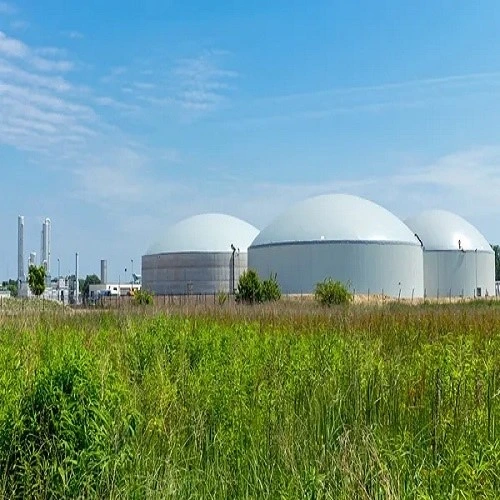
A practical waste-to-CBG plant at a sugar mill typically comprises the following integrated subsystems: feedstock handling and pre-treatment, anaerobic digestion (reactor), digestate management, biogas upgrading, compression and CBG bottling or grid injection. Each stage must be adapted to the specific feedstock mix and mill layout.
Feedstock Handling & Preparation
Feedstock handling addresses collection, shredding, homogenisation, and slurry preparation. Press-mud is often pumped as a slurry after dilution with process or recirculated water to reach optimal TS for the digester (typically 8–12% TS for wet anaerobic systems). Removal of inorganic contaminants via sieving or grit separation reduces wear and abrasion on equipment and improves digester performance.
Anaerobic Digestion and Reactor Configurations
Reactor selection depends on throughput, feedstock characteristics and desired retention time. Common reactor types in sugar-mill projects include:
– Continuously Stirred Tank Reactor (CSTR): Suitable for slurry-based feedstocks like press-mud and spent wash; provides good mixing and homogeneity.
– Plug Flow Reactor (PFR): Useful for viscous or high-solids slurries with limited mixing.
– Hybrid or two-stage systems: Separate hydrolysis/acidogenesis and methanogenesis stages can stabilise digestion for lignocellulosic or high-strength wastes.
Typical hydraulic retention times (HRT) range from 15–30 days depending on temperature (mesophilic 35–40°C or thermophilic 50–55°C), feedstock degradability and desired solids loading rate (SLR).
Biogas Composition and Upgrading
Raw biogas from digestion typically contains 50–70% methane (CH4), 30–50% carbon dioxide (CO2), traces of hydrogen sulphide (H2S), water vapour and other minor gases. For vehicular-grade CBG, methane purity must be raised to >90–95% (depending on standards used). Common upgrading technologies include:
– Water scrubbing: CO2 and H2S soluble in water under pressure—simple and low-capex but can be water-intensive.
– Pressure Swing Adsorption (PSA): Selective adsorption of CO2/impurities—modular and efficient for small-mid scale.
– Membrane separation: Compact and scalable, with limited chemical use.
– Chemical scrubbing (amine-based): High purity possible, but more complex and higher capex.
H2S removal is critical to protect downstream compressors and storage; common approaches include iron sponge, activated carbon, or biological H2S scrubbers.
Compression, Storage and Distribution
Upgraded biomethane is compressed to high pressures (typically 200–250 bar for cylinder bottling; lower pressures for piped injection depending on pipeline specs). Compression trains may include multi-stage compressors with inter-stage cooling and filtration. For onsite use, biomethane may be used as fuel for captive engines or converted to CBG for commercial sale through CBG stations or offtake agreements with OMCs.
Digestate Handling and Utilisation
Digestate is the residual solid and liquid fraction post-digestion. Proper management turns it into a value stream: solids can be dewatered and used as organic manure or compost; liquids can be used as nutrient-rich irrigation water after appropriate dilution and compliance checks. Digestate handling requires dewatering units (screw presses, centrifuges), storage lagoons, and quality monitoring to ensure agronomic safety (pathogen and heavy metal limits).
Technological Integration and Plant Setup
Integrating a CBG facility into an existing sugar mill requires layout planning, utilities integration (steam, electricity, water), control systems and safety measures. Key integration points and considerations are described below.
Site Layout and Utilities
Locating the digester close to press-mud generation minimizes transport costs. Co-locating with a distillery (if present) allows direct use of spent wash. Utilities required include reliable water supply (for slurry make-up and scrubbing), electricity for pumps/compressors and steam for drying/dewatering if needed. Heat integration—using waste heat from onsite boilers—can provide digester heating in winter or for thermophilic operation.
Control Systems, Safety and Environmental Compliance
Advanced PLC/SCADA systems monitor temperature, pH, gas flow, methane concentration, and agitator status to ensure stable operation. Safety systems must address explosive gas risks (methane), H2S exposure, and high-pressure equipment. Regulatory compliance involves environmental permits (air, water, and hazardous handling), PESO certification for high-pressure cylinders, and clearance for nutrient-based digestate application on farmland.
Modular vs Centralised Configurations
Smaller sugar mills may adopt modular, skid-mounted AD + upgrading modules (PSA or membrane) that reduce project complexity and enable staged capacity additions. Cluster or centralised models—where multiple nearby mills supply a centralized CBG facility—can achieve economies of scale, improved capacity utilisation and year-round feedstock balance.
Case Studies: Indian Sugar Mills Converting Waste to CBG
Below are illustrative real-world examples from India that demonstrate differing scales, feedstock strategies and business models.
Bajaj Hindusthan Sugar & EverEnviro (Uttar Pradesh) – Large-scale partnership
Overview: Bajaj Hindusthan, a major sugar producer, partnered with EverEnviro to valorise press-mud across multiple mills. The collaboration aims to convert a large annual volume of press-mud into CBG and organic manure.
Scale & Feedstock: The group reported around 500,000 tonnes/yr of press-mud across its operations. The project is designed to aggregate press-mud and process it in centralized/upstream facilities to produce CBG at scale.
Business Model: The arrangement includes feedstock supply contracts, shared investment in CBG plant infrastructure, and an integrated offtake strategy including selling CBG to OMCs under SATAT and marketing organic manure locally.
Muzaffarnagar CBG Plant (Uttar Pradesh) – Demonstration scale
Overview: A notable press-mud-to-CBG demonstration plant in Muzaffarnagar converted approximately 200 tonnes/day of press-mud into around 10–12 tonnes/day of CBG. The plant highlighted technical feasibility at a regionally relevant scale.
Technical Highlights: The plant used slurry-fed CSTR digesters with a focus on grit separation and pre-treatment to reduce inorganic loading. Upgrading was performed using PSA technology, and digestate was processed into organic manure sold to local farmers.
Economics: The project reported moderate CAPEX in the range of several crores (indicative values around INR 35–55 crores depending on scope), with revenue streams from CBG, manure sales and potential incentives under SATAT.
Bannari Amman Sugars / Dalmia Bharat (Tamil Nadu & Uttar Pradesh) – Integrated bioenergy
Overview: These groups have integrated ethanol, cogeneration and biogas/CBG units within their complex. Their models demonstrate how existing energy and distillery infrastructure can be repurposed for CBG production from molasses and distillery vinasse along with press-mud.
Integration Benefits: Utilising molasses and vinasse—already handled in distillery units—allows continuous feedstock supply even outside the crushing season, improving year-round plant economics. The synergy also allows heat and power sharing, lowering incremental utility costs.
Comparative Data Table: Selected Sugar Mills
| Sugar Mill / Group | Primary Feedstock for CBG | Approx. CBG Output (TPD) | Key Notes |
| Bajaj Hindusthan (EverEnviro partnership) | Press-mud (aggregated) | Up to 70 TPD (targeted across projects) | Centralised aggregation; SATAT offtake strategy |
| Muzaffarnagar plant (demo) | Press-mud slurry | ≈10–12 TPD | PSA upgrading; manure sales |
| Bannari Amman/Dalmia Bharat | Molasses, Vinasse, Press-mud | 10–30 TPD (varies by site) | Integrated with distillery and cogeneration |
| Shree Renuka / other regional mills | Press-mud, spent wash | 5–30 TPD | Modular projects, local CBG sales |
Economic and Environmental Impacts
Economic analysis of waste-to-CBG projects must consider CAPEX (digesters, upgrading, compression, civil works), OPEX (feedstock handling, utilities, labour, maintenance), revenue streams (CBG sales, manure sales, carbon credits/incentives) and financial supports (subsidies, concessional financing).
Indicative CAPEX and OPEX values vary widely with scale. A 10–12 TPD CBG plant (processing ~200 TPD press-mud) can have CAPEX in the tens of crores INR, while smaller modular plants have lower upfront costs but higher per-unit OPEX. Key revenue drivers include assured offtake prices under SATAT, manure pricing, and plant utilisation factor.
Environmental Benefits
– Methane mitigation: Capturing methane from anaerobic decomposition avoids uncontrolled emissions from open dumps or lagoons, reducing the greenhouse gas (GHG) footprint.
– Reduced pollution: Treating spent wash and press-mud in controlled digesters reduces BOD/COD loads and eutrophication risks in nearby water bodies.
– Circularity: Digestate use returns nutrients to soil, replacing part of chemical fertiliser demand and improving soil organic carbon.
Typical Financial Model Components
A financial model typically includes: capital cost breakdown (digester, gas treatment, compressor, dewatering, civil), operating costs (energy, chemicals, labour), revenue projections (CBG price per kg or per GJ, manure sales per tonne), working capital assumptions and debt/equity mix. Payback periods depend on subsidies, feedstock cost (often low or negative if mills need disposal), and local offtake markets; illustrative paybacks range from 5–10 years in favourable setups.
Government Policies and Incentives
India’s SATAT initiative has been instrumental in providing a commercial pathway for CBG producers through structured offtake by Oil Marketing Companies (OMCs). Other policy supports include capital subsidies (state-specific), priority in environmental clearances for integrated waste-to-energy projects, and potential carbon credit programmes.
Key policy considerations for sugar-mill CBG projects:
– SATAT registration and offtake agreements help secure revenue streams.
– Access to low-interest loans or green financing from national and state agencies can materially improve project viability.
– Linkages with agricultural extension programs help market digestate to farmers and secure long-term manure buyers.
Challenges and Recommendations
Despite technical feasibility and promising up-side, several barriers must be addressed to scale CBG in the sugar sector. Below we summarise practical challenges and recommend mitigation strategies.
Key Challenges
– Seasonality and feedstock continuity: Sugar mills are seasonal; stockpiling, co-digestion with distillery effluents, or centralised cluster models can mitigate.
– Capital intensity: High upfront costs for upgrading and compression; leverage modular technologies and phased investments.
– Quality variation: Variable feedstock composition needs pre-treatment and adaptive process control.
– Offtake and logistics: Establishing CBG sellers, CNG stations or pipeline injection arrangements are critical for revenue stability.
– Regulatory complexity: Multiple permits (environmental, PESO, safety) require coordinated timelines.
Conclusion and Future Outlook
Converting sugar mill residues into CBG represents a pragmatic, scalable path for the sugar industry to enhance sustainability, diversify revenue and support India’s energy transition. The combination of available feedstock volumes, evolving upgrading technologies and policy support under SATAT creates a conducive environment for deployment. Nonetheless, careful project structuring—addressing seasonality, feedstock handling, and offtake—remains critical.
Future developments likely to accelerate adoption include improved pre-treatment for bagasse valorisation, cost reductions in membrane/PSA upgrading, cluster-based feedstock aggregation models, and stronger integration with national renewable-fuel targets.