



Introduction
The global energy landscape is undergoing a significant transformation as nations strive to reduce greenhouse gas emissions, improve air quality, and transition toward sustainable energy systems. In this context, Compressed Bio-Gas (CBG) has emerged as a critical renewable fuel capable of addressing multiple environmental, economic, and social challenges simultaneously. Produced from organic waste through anaerobic digestion and subsequent purification, CBG offers a clean, indigenous, and scalable alternative to fossil-based fuels such as CNG, LPG, diesel, and coal.
India, in particular, faces a unique convergence of challenges—rapid urbanization, increasing energy demand, severe air pollution, growing organic waste generation, and heavy dependence on imported fossil fuels. Large quantities of agricultural residue, cattle dung, food waste, press mud, sewage sludge, and municipal solid waste are generated every year. When left untreated, this waste decomposes in open fields, landfills, or water bodies, releasing methane and other harmful pollutants into the atmosphere. These uncontrolled emissions contribute significantly to climate change, air pollution, foul odors, and public health risks.
CBG plants provide a scientifically proven and environmentally sustainable solution by converting biodegradable waste into high-quality renewable gas. Through controlled anaerobic digestion, methane-rich biogas is produced and then upgraded to CBG by removing impurities such as carbon dioxide, hydrogen sulfide, moisture, and siloxanes. The resulting fuel meets stringent automotive and City Gas Distribution (CGD) standards and can be directly used for transportation, industrial heating, and domestic cooking.
One of the most important aspects of CBG lies in its climate mitigation potential. Methane is a potent greenhouse gas with a global warming potential far greater than carbon dioxide. By capturing methane that would otherwise escape from landfills and open waste decomposition, CBG plants significantly reduce greenhouse gas emissions. Additionally, since CBG is derived from renewable biomass, its combustion is considered carbon-neutral, making it a powerful tool in achieving long-term decarbonization goals.
Beyond climate benefits, CBG plants play a crucial role in improving air quality. Unlike diesel and coal, CBG burns cleanly, producing negligible particulate matter, sulfur oxides, and smoke. This makes it particularly valuable in reducing urban air pollution, which has become a major public health concern in India. Furthermore, by providing a productive use for agricultural residues, CBG plants help curb stubble burning—one of the primary causes of seasonal smog in northern India.
Recognizing these benefits, the Government of India has launched initiatives such as the SATAT (Sustainable Alternative Towards Affordable Transportation) scheme and the GOBARdhan Mission, aimed at promoting large-scale adoption of CBG plants across rural and urban regions. These initiatives seek to enhance waste-to-energy conversion, promote circular economy principles, generate rural employment, and reduce dependence on imported fuels.
As India moves toward its Net Zero 2070 commitment, CBG plants are increasingly viewed not just as energy projects, but as integrated environmental infrastructure. Their ability to reduce carbon emissions, control air pollution, improve waste management, and produce organic fertilizer positions them as a cornerstone of sustainable development. This detailed discussion explores how CBG plants contribute to emission reduction and air quality improvement, highlighting their role in building a cleaner, healthier, and more resilient energy future.
Capturing Methane Emissions from Organic Waste
Organic waste—including cattle dung, crop residues (such as wheat and rice straw), food waste from households and industries, sewage sludge, and municipal solid waste—is abundant in India due to its large agricultural base and growing urban populations. When this waste is left in open environments like landfills, ponds, or open fields, it decomposes anaerobically (without oxygen), producing methane (CH₄) as a by-product.
Methane is a highly potent greenhouse gas, with a global warming potential approximately 25–28 times greater than carbon dioxide over a 100-year timeframe. This means that although methane persists in the atmosphere for a shorter period than CO₂, it traps significantly more heat, accelerating global warming in the near term.
Without intervention, methane from waste decomposition contributes significantly to India’s overall greenhouse gas emissions, undermining climate goals.
CBG plants mitigate this problem by:
- Collecting organic waste at source: Waste is segregated and gathered from farms, food processing units, municipal bodies, and industries.
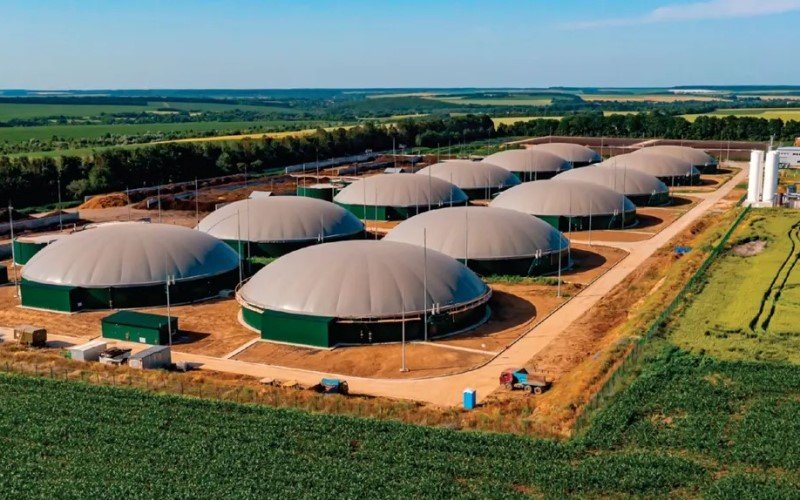
- Processing waste in controlled anaerobic digesters: These airtight reactors provide an ideal environment for microorganisms to break down organic matter safely and efficiently.
- Capturing methane-rich biogas: Instead of escaping into the atmosphere, methane is captured as biogas, typically containing 50–70% methane.
- Purifying and converting biogas into CBG: Carbon dioxide, hydrogen sulfide, moisture, and other impurities are removed, resulting in compressed bio-gas that meets commercial fuel standards.
This controlled methane capture and utilization prevents vast quantities of methane from escaping, thereby significantly reducing greenhouse gas emissions from waste sources.
Conversion of Waste into Carbon-Neutral Energy
Compressed Bio-Gas (CBG) is a renewable fuel produced by converting organic waste materials into usable energy. Unlike fossil fuels such as coal, petrol, diesel, or natural gas—which are derived from ancient carbon deposits buried underground over millions of years—CBG originates from recent biological sources.
Carbon Cycle and Photosynthesis
The key to understanding why CBG is considered carbon-neutral lies in the natural carbon cycle:
- Plants absorb carbon dioxide (CO₂) from the atmosphere during photosynthesis to grow and produce biomass such as crops, grasses, and agricultural residues.
- This biomass contains carbon that was recently taken from the air, unlike fossil fuels that release carbon locked away for millions of years.
- When this biomass is converted into CBG and subsequently burned for energy, the carbon is released back into the atmosphere as CO₂.
- The amount of CO₂ released during combustion is roughly equal to the amount originally absorbed by the plants, creating a balanced, “closed loop” carbon cycle.
Thus, unlike fossil fuels, CBG combustion does not introduce new carbon into the atmosphere but merely recycles the carbon already present, making it carbon-neutral.
Carbon-Negative Potential of CBG
In certain cases, CBG systems can even become carbon-negative, meaning they reduce more greenhouse gases than they emit. This occurs because:
- The anaerobic digestion process in CBG plants captures methane (CH₄) that would otherwise escape from decomposing waste.
- Methane is a much more potent greenhouse gas than CO₂ (about 25 times stronger over 100 years).
- By preventing methane release and replacing fossil fuels, the overall greenhouse gas reductions can exceed the CO₂ released during combustion.
- Additionally, the use of organic digestate as fertilizer can improve soil carbon content, further enhancing carbon sequestration.
Significant Reduction in Local Air Pollutants
Air pollution is one of India’s most pressing health and environmental issues, largely caused by burning fossil fuels such as diesel, coal, and biomass. These fuels release a variety of harmful pollutants into the atmosphere, each with serious consequences:
- Particulate Matter (PM2.5 and PM10):
These are tiny particles suspended in the air that can penetrate deep into the lungs and even enter the bloodstream. Exposure to high levels of particulate matter is linked to respiratory diseases like asthma, bronchitis, chronic obstructive pulmonary disease (COPD), heart disease, and stroke. - Nitrogen Oxides (NOx):
NOx gases contribute to the formation of ground-level ozone, a major component of smog. Smog irritates respiratory tracts, exacerbates asthma, and reduces lung function, particularly affecting children and the elderly. - Sulfur Oxides (SOx):
Produced mainly from burning coal and oil containing sulfur, these gases can cause acid rain, which damages crops, forests, and aquatic ecosystems. SOx also aggravates respiratory illnesses. - Carbon Monoxide (CO):
CO is a colorless, odorless gas that reduces the blood’s ability to carry oxygen, leading to headaches, dizziness, and at high levels, can be fatal. - Black Carbon and Smoke:
Black carbon particles absorb sunlight and contribute to atmospheric warming. Smoke particles carry toxic compounds harmful to health and worsen air quality.
How CBG Combustion Helps:
CBG combustion is significantly cleaner than fossil fuels because:
- It produces negligible particulate matter, lowering smog and respiratory disease risks.
- It emits almost zero sulfur oxides, as CBG lacks sulfur-containing compounds present in coal and oil.
- It releases much lower nitrogen oxides (NOx), reducing smog formation and ozone production.
- It generates no smoke, soot, or ash, improving air clarity and reducing pollutants that cause lung irritation.
Because of these cleaner emissions, CBG is especially beneficial for:
- Urban transport fleets (buses, taxis, delivery vehicles), which operate in densely populated areas.
- Public buses, which contribute significantly to urban pollution.
- Industrial zones where workers are exposed to pollutants.
- Enclosed environments such as warehouses or factories, where indoor air quality is critical.
Prevention of Stubble Burning and Open Biomass Burning
One of the largest contributors to seasonal air pollution in parts of northern India is stubble burning—where farmers burn leftover crop residues like wheat and rice stalks after harvest. This practice is often driven by:
- Lack of affordable or practical alternatives for disposing of large volumes of agricultural waste.
- The need to quickly clear fields for the next planting season.
Stubble burning releases:
- Massive quantities of particulate matter and black carbon, worsening smog and contributing to climate warming.
- Carbon monoxide and other toxic gases that are hazardous to human health.
Role of CBG Plants:
CBG plants offer a sustainable and economically attractive alternative by:
- Utilizing crop residues, press mud (a by-product of sugar production), Napier grass, and other biomass as feedstock for biogas production.
- Providing farmers with additional income by purchasing their agricultural waste.
- Eliminating the need for open burning, significantly reducing pollution episodes.
This transition is especially valuable during the critical winter months when pollution levels spike due to weather conditions and temperature inversions.
Reduction in Landfill Emissions and Urban Air Pollution
Landfills are significant sources of local pollution:
- Methane emissions result from the anaerobic decomposition of organic waste, contributing to greenhouse gas buildup.
- Foul odors affect nearby communities.
- Toxic landfill gases, including volatile organic compounds (VOCs), pose health risks.
- Landfill fires, often caused by methane buildup, release thick smoke and hazardous pollutants.
CBG’s Contribution:
By processing biodegradable waste at the source through decentralized systems, CBG plants:
- Reduce dependence on landfills, lowering methane and odor emissions.
- Divert waste away from landfill sites, preventing pollution and health hazards.
- Decrease landfill fire risks due to controlled waste management.
Cities implementing CBG-based waste management experience:
- Cleaner urban air, benefiting public health.
- Reduced environmental burden on landfill sites.
Lower Emissions from Chemical Fertilizer Production
CBG plants produce digestate, a nutrient-rich by-product of anaerobic digestion that acts as a natural fertilizer.
Using digestate instead of chemical fertilizers leads to:
- Lower demand for synthetic fertilizers, which are energy-intensive to manufacture and contribute significantly to CO₂ emissions.
- Reduced emissions from fertilizer production plants.
- Enhanced soil carbon content and fertility, promoting sustainable agriculture.
Thus, by replacing chemical fertilizers, CBG plants indirectly reduce carbon emissions while improving soil health.
Conclusion
The integration of Compressed Bio-Gas (CBG) as a clean alternative fuel in the transportation sector offers a multifaceted solution to pressing environmental and public health challenges. Compared to traditional diesel vehicles, CBG-powered vehicles contribute to a significant reduction in carbon dioxide emissions, addressing the urgent need to curb greenhouse gases and mitigate climate change. Additionally, the near elimination of particulate matter and substantial decrease in nitrogen oxide emissions from CBG combustion lead to markedly improved air quality, particularly in densely populated urban areas where vehicular pollution is a major health concern.
This transition not only supports India’s commitment to its climate goals under international agreements such as the Paris Accord but also directly benefits millions of citizens by reducing exposure to toxic pollutants that cause respiratory illnesses, cardiovascular diseases, and premature deaths. Furthermore, the utilization of CBG leverages locally available organic waste resources, promoting circular economy principles and reducing dependency on imported fossil fuels.
The growing adoption of CBG in public transport fleets, commercial vehicles, and agricultural machinery exemplifies a scalable and sustainable pathway towards decarbonizing transportation. To maximize these benefits, coordinated efforts involving policy support, infrastructure development for CBG production and distribution, and awareness campaigns are essential.