



Introduction
Compressed Biogas (CBG) plants are increasingly recognized as a pivotal component of India’s renewable energy landscape, supporting national objectives related to energy security, circular economy development, and sustainable waste management. While considerable emphasis is often placed on plant capacity, digester configuration, gas upgrading technologies, and policy incentives, the primary determinant of long-term CBG plant performance remains the robustness of the feedstock strategy.
A CBG Plant Manufacturers in India operates as a biological conversion system governed by anaerobic microbial processes, rather than as a conventional mechanical or electrical installation. Unlike industrial processes where raw material characteristics can be standardized and tightly controlled, anaerobic digestion depends on complex microbial consortia that are highly sensitive to variations in feedstock composition, organic loading rate, and supply continuity. Even minor inconsistencies in feedstock quality or feeding patterns can disrupt microbial equilibrium, resulting in fluctuations in biogas production, methane concentration, and overall process efficiency.
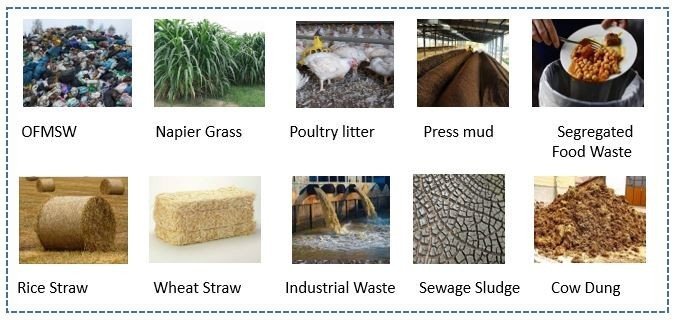
Feedstock management presents additional challenges due to the heterogeneous and geographically dispersed nature of biomass resources. Common feedstocks such as agricultural residues, cattle dung, press mud, municipal organic waste, and industrial effluents exhibit significant variability in terms of biochemical composition, moisture content, and seasonal availability. These factors, combined with fragmented supply chains, logistical constraints, and inconsistent waste segregation practices, significantly increase the operational risks associated with inadequate feedstock planning.
It encompasses a detailed evaluation of feedstock quantity, quality, and seasonal variability; assessment of biochemical methane potential (BMP); development of optimized feedstock blending ratios to maintain process stability; selection of suitable pre-treatment techniques to enhance biodegradability; and the design of reliable collection, transportation, and storage systems. Furthermore, continuous monitoring and adaptive optimization during plant operation are essential to ensure sustained performance under changing feedstock conditions.
An effectively designed feedstock strategy enables stable anaerobic digestion, mitigates common process upsets such as acidification and ammonia inhibition, and maximizes methane yield per unit of organic input. These technical benefits directly translate into higher CBG output, reduced operational disruptions, lower specific production costs, and improved financial returns, thereby enhancing project bankability and long-term investor confidence.
Feedstock strategy has a direct influence on core engineering parameters, including digester sizing, hydraulic retention time, organic loading limits, gas handling capacity, and overall plant configuration. Underestimation of feedstock variability or improper blending assumptions can lead to digester overloading, frequent downtime, accelerated equipment wear, and elevated maintenance costs. Conversely, a well-optimized feedstock plan enables efficient asset utilization, operational flexibility, and scalability of plant capacity.
As India accelerates the deployment of CBG plants across rural, industrial, and urban sectors, feedstock optimization will increasingly emerge as the defining factor distinguishing sustainable, bankable projects from underperforming assets.
Understanding Feedstock Characteristics and Their Impact on Anaerobic Digestion
Feedstock characteristics determine how efficiently organic material is converted into biogas inside an anaerobic digester. Unlike conventional fuels, feedstock for CBG plants is heterogeneous, biologically active, and highly variable, making its characterization essential before plant design and operation.
Key parameters such as Total Solids (TS), Volatile Solids (VS), Carbon-to-Nitrogen (C:N) ratio, biodegradability, moisture content, and inhibitory substances collectively influence digestion kinetics and methane generation. Feedstock with high volatile solids content generally offers higher biogas potential, but only if those solids are readily biodegradable.
The C:N ratio plays a particularly crucial role. Carbon acts as an energy source for microbes, while nitrogen is required for protein synthesis. An imbalance can cause process failure—excess nitrogen leads to ammonia toxicity, while excess carbon causes nutrient deficiency and low gas yield. Therefore, feedstock analysis through laboratory testing and pilot digestion trials is a non-negotiable step for reliable plant performance.
Understanding these characteristics allows EPC designers and operators to predict:
- Methane yield potential
- Required digester volume
- Organic loading limits
- Process stability and risk factors
Agricultural Residues as Feedstock: Opportunities and Constraints
Agricultural residues represent one of the largest biomass resources available for CBG production in India. Materials such as paddy straw, wheat straw, maize stalks, and sugarcane trash are generated in massive quantities and often pose disposal challenges, including open-field burning.
Agricultural residues are rich in carbon and offer long-term feedstock security. However, their lignocellulosic structure makes them resistant to microbial degradation. Lignin acts as a protective barrier, slowing down hydrolysis—the first and rate-limiting step of anaerobic digestion.
Without proper pre-treatment, agricultural residues lead to:
- Low methane yield
- Longer hydraulic retention times
- Digester scum and floating layers
To unlock their full potential, residues must undergo size reduction, moisture adjustment, and co-digestion with nitrogen-rich substrates such as cattle dung or press mud. When properly managed, agricultural residues become a dependable backbone feedstock for rural and agro-based CBG plants.
Cattle Dung and Dairy
Cattle dung has been the traditional feedstock for biogas plants due to its excellent buffering capacity and microbial diversity. Although its methane yield per ton is relatively lower, dung plays a vital role in maintaining digester stability.
Dung contains naturally occurring anaerobic bacteria that help inoculate the digester, making it especially important during plant startup and feedstock transitions. It also provides moisture and alkalinity, reducing the risk of acidification.
In modern CBG plants, cattle dung is rarely used as a standalone feedstock. Instead, it acts as a process stabilizer, enabling the safe digestion of high-energy but unstable feedstocks such as food waste, press mud, or spent wash.
Press Mud: High-Yield Feedstock with Operational Sensitivity
Press mud, a by-product of sugar manufacturing, is among the most attractive feedstocks for CBG plants due to its high organic content and excellent biogas yield. It contains residual sugars, fibers, and organic acids that are readily digestible.
However, press mud also introduces operational challenges. Its composition varies across sugar mills and seasons, and it often contains high sulphur content, which leads to hydrogen sulfide (H₂S) formation in biogas. Excess H₂S causes corrosion, reduces gas quality, and increases maintenance costs.
To use press mud effectively, plants must adopt:
- Controlled feeding strategies
- Sulphur management systems
- Co-digestion with alkaline substrates
When optimized, press mud can significantly enhance plant profitability, especially in sugar-belt regions.
Distillery Spent Wash: High Energy Liquid Feedstock
Spent wash from distilleries offers one of the highest methane yields among industrial feedstocks. Being liquid, it simplifies handling and mixing, making it ideal for continuous feeding systems.
However, spent wash is highly acidic and has extremely high COD and organic loading potential. If introduced without dilution or buffering, it can cause digester shock, rapid acidification, and microbial inhibition.
Successful spent wash digestion depends on:
- Accurate dosing and flow control
- Strong buffering systems
- Continuous monitoring of pH, VFAs, and alkalinity
When integrated carefully, spent wash can increase CBG output while solving an industrial waste disposal challenge.
Feedstock Pre-Treatment
Feedstock pre-treatment is a critical process step in CBG plants aimed at enhancing the biodegradability of organic substrates and improving overall methane yield. In anaerobic digestion, the rate-limiting stage is typically hydrolysis, where complex organic compounds such as cellulose, hemicellulose, proteins, and lipids are broken down into simpler, soluble molecules that can be metabolized by anaerobic microorganisms. Many commonly used CBG feedstocks—particularly agricultural residues, press mud, and municipal organic waste—contain structural or chemical barriers that significantly hinder this process.
Without appropriate pre-treatment, a large fraction of the organic matter remains inaccessible to microbial action, resulting in lower biogas yield, extended hydraulic retention times, and inefficient utilization of digester volume. Pre-treatment technologies are therefore deployed to disrupt the physical structure of the feedstock, reduce particle size, alter chemical composition, and increase the surface area available for microbial attachment. When properly selected and implemented, pre-treatment can substantially enhance methane production per unit of feedstock, thereby improving plant throughput and economic performance.
The selection of a pre-treatment method depends on several factors, including feedstock type, solids content, desired loading rate, digester configuration, energy balance, and overall project economics. An effective pre-treatment strategy must strike a balance between incremental methane gains and the additional capital and operating costs associated with the pre-treatment system.
Mechanical Pre-Treatment
Mechanical pre-treatment is the most widely adopted and economically feasible approach in CBG plants. It primarily involves size reduction and homogenization of feedstock through shredding, grinding, maceration, or milling. By reducing particle size, mechanical pre-treatment increases the specific surface area of the feedstock, allowing hydrolytic enzymes to act more effectively on organic polymers.
For fibrous feedstocks such as paddy straw, wheat straw, sugarcane trash, and press mud, mechanical pre-treatment is essential to prevent floating layers, scum formation, and digester clogging. It also improves slurry pumpability and ensures uniform mixing within the digester. While mechanical pre-treatment does not alter the chemical structure of biomass, it significantly improves process stability and is often considered a baseline requirement for most CBG projects.
Chemical Pre-Treatment
Chemical pre-treatment employs acids, alkalis, or oxidizing agents to modify the chemical structure of biomass and increase its digestibility. Alkali pre-treatment using lime, sodium hydroxide, or ammonia is commonly applied to lignocellulosic feedstocks, as it effectively removes lignin and improves cellulose accessibility.
While chemical pre-treatment can lead to substantial increases in methane yield, it introduces additional considerations related to chemical handling, corrosion, pH control, and effluent management. Excessive chemical dosing may also inhibit microbial activity if not properly neutralized. As a result, chemical pre-treatment is generally adopted in controlled industrial settings rather than decentralized rural plants.
Co-Digestion Strategy
Co-digestion refers to the simultaneous anaerobic digestion of two or more feedstocks with complementary characteristics in a single digester system. In CBG plants, co-digestion is a strategic process design approach adopted to enhance methane yield, stabilize biological processes, and improve overall plant performance.
Co-digestion improves biological performance by:
- Balancing the carbon-to-nitrogen (C:N) ratio, maintaining it within the optimal range of 20:1 to 30:1
- Providing a broader spectrum of macro- and micronutrients essential for microbial growth
- Diluting inhibitory compounds such as ammonia, sulphides, and long-chain fatty acids
- Enhancing microbial diversity and metabolic flexibility.
In CBG Projects feedstock-related costs account for 30–50% of total operating expenditure (OPEX). Any inefficiency in feedstock procurement, handling, or utilization directly erodes profitability. Conversely, a well-optimized feedstock strategy enhances methane yield, stabilizes operations, and maximizes revenue generation, thereby strengthening overall project.
Influence of Feedstock on Capital Expenditure (CAPEX)
Feedstock characteristics directly influence core engineering design parameters, which in turn determine capital investment requirements. Parameters such as total solids content, biodegradability, and organic loading rate affect:
- Digester volume and number of digesters
- Mixing and agitation systems
- Feedstock reception and storage facilities
- Pre-treatment infrastructure
- Slurry handling and pumping systems
For example, low-biodegradability feedstocks with high lignocellulosic content typically require larger digester volumes or longer hydraulic retention times, leading to higher civil and mechanical costs. In contrast, optimized feedstock blends with improved digestibility allow for compact digester design and higher loading rates, reducing overall CAPEX per unit of CBG produced.
Methane Yield and Revenue Generation
Revenue from a CBG plant is fundamentally linked to methane output, which depends on feedstock quality and digestibility. Higher methane yield per ton of feedstock results in:
- Increased CBG production
- Better utilization of upgrading and compression assets
- Higher revenue per unit of digester volume
Feedstock optimization through blending and pre-treatment can significantly improve specific methane yield, thereby increasing annual CBG output without additional capital investment. This improvement directly enhances plant revenue and shortens the payback period.
Conclusion
Feedstock strategy is a defining factor in the performance and sustainability of Compressed Biogas (CBG) plants. Beyond determining daily gas output, feedstock quality, consistency, and availability directly influence digester stability, methane concentration, operating costs, and overall plant reliability. Optimized feedstock blending and appropriate pre-treatment unlock higher methane potential while reducing process disturbances such as acidification, inhibition, and unplanned downtime. Robust feedstock planning enhances capital utilization, lowers lifecycle operating costs, improves project bankability, and supports consistent revenue generation. CBG projects that integrate feedstock strategy into the earliest stages of feasibility, design, and execution are better positioned to deliver long-term environmental benefits while achieving reliable commercial performance. Ultimately, treating feedstock not merely as an input but as a strategic asset is key to building resilient, scalable, and future-ready CBG infrastructure.