



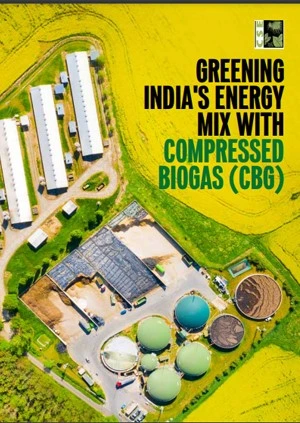
Introduction – India’s Energy Challenge
India’s energy sector is undergoing a major transformation driven by the twin imperatives of rapid economic growth and environmental sustainability. With an expanding population, rising industrial output, and urbanization at an unprecedented pace, the country’s energy demand has increased multifold. India today ranks as the third-largest consumer of primary energy in the world, after the United States and China.
Despite this growth, India remains heavily dependent on imported energy resources. Approximately 85% of crude oil, 50% of natural gas, and a substantial portion of liquefied petroleum gas (LPG) are imported from foreign markets. This dependence exposes India to global supply disruptions, geopolitical instability, and currency fluctuations, often leading to inflationary pressure on the domestic economy.
At the same time, the reliance on fossil fuels is a major contributor to air pollution and greenhouse gas emissions, which are responsible for both health hazards and environmental degradation. It is increasingly clear that energy independence is not just about economic savings but about national security, sustainability, and self-reliance.
Among several renewable alternatives, Compressed Biogas (CBG) has emerged as a strategically important solution capable of addressing these multiple challenges. It offers a sustainable, indigenous, and circular form of energy that can supplement and eventually replace imported natural gas and diesel in various applications.
Understanding CBG’s Strategic Potential
Compressed Biogas (CBG) is produced from organic waste through the process of anaerobic digestion — a natural decomposition of biomass in the absence of oxygen. The raw biogas thus generated is purified, upgraded, and compressed to produce high-purity methane gas (typically 95% CH₄), which can be used interchangeably with Compressed Natural Gas (CNG).
CBG’s significance lies in its multi-sectoral application. It can be used for transportation, industrial heating, power generation, and even domestic cooking. Since it matches the properties of CNG, CBG can be directly injected into existing gas pipelines and CNG networks without requiring any technological overhaul.
From a strategic standpoint, this makes CBG an ideal substitute for imported fossil fuels, allowing India to localize its energy supply chain. The feedstock required for biogas production — such as agricultural residues, animal manure, municipal organic waste, and food processing by-products — is abundantly available across the country. This means the entire fuel production cycle can be managed domestically, keeping value addition within India.
Moreover, CBG is a continuous and dispatchable energy source, unlike solar or wind energy, which are intermittent. It provides a stable, around-the-clock supply of renewable gas that can complement India’s growing renewable power capacity. Thus, CBG is not just a fuel; it’s a strategic energy enabler that ensures reliability, sustainability, and self-reliance.
The SATAT Initiative – A Step Toward Energy Self-Reliance
Recognizing the potential of biogas, the Government of India launched the SATAT (Sustainable Alternative Towards Affordable Transportation) initiative in October 2018. The program envisions setting up 5,000 CBG plants across the country to generate approximately 15 million metric tonnes of CBG per year.
Under SATAT, Public Sector Oil Marketing Companies (OMCs) such as Indian Oil Corporation (IOCL), Bharat Petroleum (BPCL), and Hindustan Petroleum (HPCL) are authorized to procure CBG from producers under long-term offtake agreements. This creates a secured market ecosystem where entrepreneurs can confidently invest in CBG production knowing that their output will have guaranteed buyers.
SATAT also aims to reduce India’s dependency on fossil fuels, create employment in rural areas, and manage waste effectively. The policy supports the concept of “waste-to-wealth”, aligning with the Swachh Bharat Mission, Atmanirbhar Bharat, and climate action goals under India’s commitments to the Paris Agreement.
Beyond fuel replacement, SATAT is driving a new green economy — where farmers, startups, and local industries participate in producing renewable energy from agricultural and organic waste, thereby reducing imports and strengthening India’s energy sovereignty.
Rural Empowerment and Localized Energy Production
The CBG holds immense potential for rural development. In contrast to conventional fossil fuel infrastructure, which is centralized and capital-intensive, CBG production can be decentralized and established in rural or semi-urban areas.
Farmers and rural communities play a central role in this ecosystem. Agricultural residues like paddy straw, sugarcane press mud, and livestock manure — which often go to waste or cause pollution through open burning — can be utilized as raw material for CBG plants. This not only provides farmers with an additional income source but also helps in addressing the recurring problem of crop residue burning, a major cause of smog and air pollution in northern India.
Additionally, the by-product of the CBG process, called digestate or bio-slurry, is rich in nutrients and serves as an excellent organic fertilizer. It improves soil health, enhances water retention, and reduces the dependency on chemical fertilizers, promoting sustainable agriculture.
This creates a closed-loop system where waste becomes fuel, and the residue nourishes the soil — ensuring that every part of the cycle adds value. By generating energy locally and improving agricultural output, CBG plants transform rural India into an active contributor to national energy independence.
Economic and Environmental Gains
The benefits of CBG are twofold — economic resilience and environmental restoration.
Economically, domestic CBG production directly offsets imports of expensive liquefied natural gas (LNG) and diesel. According to industry estimates, widespread CBG adoption could save billions of dollars annually in foreign exchange. It also contributes to local job creation, as each CBG plant requires skilled labor for operation, maintenance, and logistics.
Environmentally, the impact is profound. CBG plants help in mitigating methane emissions, one of the most potent greenhouse gases. When organic waste decomposes in open dumps or landfills, it releases methane directly into the atmosphere. Capturing and converting it into usable biogas prevents this emission and provides renewable energy simultaneously.
Furthermore, using CBG in vehicles and industries results in cleaner combustion, drastically lowering emissions of carbon monoxide, sulfur oxides, and particulate matter. The use of bio-fertilizer further prevents soil degradation caused by synthetic fertilizers.
In short, CBG embodies a circular economy principle — addressing waste management, energy generation, and environmental protection in one integrated system.
Integration with India’s Gas Grid and Mobility Sector
India’s existing City Gas Distribution (CGD) network provides a ready platform for integrating CBG into mainstream energy use. The gas can be blended with natural gas and distributed to households, industries, and transportation networks seamlessly.
CBG is a drop-in substitute for CNG, which means that it can be used in all existing CNG vehicles without any modification. With over 6,000 CNG stations and more than 5 million CNG-powered vehicles on Indian roads, CBG can rapidly replace fossil-based CNG, reducing emissions and import dependence.
Moreover, CBG can power rural transportation, tractors, and agricultural equipment, providing farmers with cleaner and cheaper energy alternatives. For industries located away from gas pipelines, bottled CBG cylinders offer a portable and reliable clean fuel option.
As India pushes forward with the National Green Mobility Mission and targets cleaner logistics and public transportation, CBG will play a central role in transforming the mobility landscape through indigenous renewable gas solutions.
Policy and Investment Landscape
India’s policy ecosystem for CBG is highly supportive and designed to attract private and public participation. Alongside SATAT, several government schemes have been aligned to promote waste-to-energy technologies.
The GOBAR-Dhan (Galvanizing Organic Bio-Agro Resources Dhan) scheme, launched under the Swachh Bharat Mission, focuses on converting rural organic waste into biogas and compost. Similarly, the National Bioenergy Mission supports the development of bioenergy infrastructure, technology innovation, and standardization.
States like Uttar Pradesh, Haryana, and Maharashtra have also introduced state-level subsidies and land allocation policies to accelerate CBG project deployment.
On the investment front, private companies, cooperative societies, and startups are entering the sector with innovative financing models. Partnerships between technology providers, investors, and farmers are making CBG projects more viable. The involvement of Oil Marketing Companies as guaranteed buyers has further strengthened investor confidence, ensuring that the produced gas will find a stable market.
This synergy of policy, technology, and finance has created a fertile ground for the expansion of CBG infrastructure across the nation.
Challenges to Overcome
Despite strong government backing, several challenges hinder the rapid scaling up of CBG technology in India.
- Feedstock Collection and Logistics: Securing a consistent, clean, and economically transportable supply of biomass is one of the biggest hurdles. Agricultural residues are seasonal, and municipal waste often lacks proper segregation.
- High Initial Capital Cost: Setting up a CBG plant involves substantial investment in digesters, purification systems, compressors, and storage facilities. For small entrepreneurs, accessing this capital can be difficult despite available subsidies.
- Technical and Operational Barriers: Many plants face efficiency issues due to improper technology selection, lack of skilled manpower, and limited technical know-how at the ground level.
- Awareness and Acceptance: While policymakers and large corporations recognize the importance of CBG, public awareness, especially at the rural level, remains limited.
- Infrastructure Bottlenecks: Integrating CBG into the national gas grid and establishing an adequate number of refueling stations are logistical challenges that require coordinated infrastructure planning.
Overcoming these challenges calls for enhanced training programs, streamlined financing mechanisms, and improved feedstock management systems. Public-private partnerships, when combined with policy clarity and innovation, can resolve most of these issues effectively.
Conclusion – Powering India’s Energy Independence
Compressed Biogas represents much more than just a renewable fuel — it is a strategic national asset capable of reshaping India’s energy, economic, and environmental landscape.
By converting waste into clean energy, CBG embodies the concept of “Waste to Wealth”, supporting both rural livelihoods and urban sustainability. It enables India to move toward true energy independence by replacing imported fossil fuels with domestically produced renewable gas.
Economically, CBG strengthens India’s foreign exchange reserves, supports rural entrepreneurship, and opens up thousands of jobs across the waste management and energy sectors. Environmentally, it helps India achieve its Net Zero 2070 targets by significantly reducing methane and CO₂ emissions.
Socially, it empowers farmers and local communities, providing them income stability while promoting cleaner living conditions through effective waste utilization.
As India continues to invest in renewable infrastructure, the large-scale deployment of CBG plants will be a key milestone in the nation’s journey toward a cleaner, self-reliant, and sustainable future.
In essence, CBG is not merely a fuel — it is a strategic bridge to energy sovereignty, connecting waste management, rural development, and climate action into one powerful national mission.