



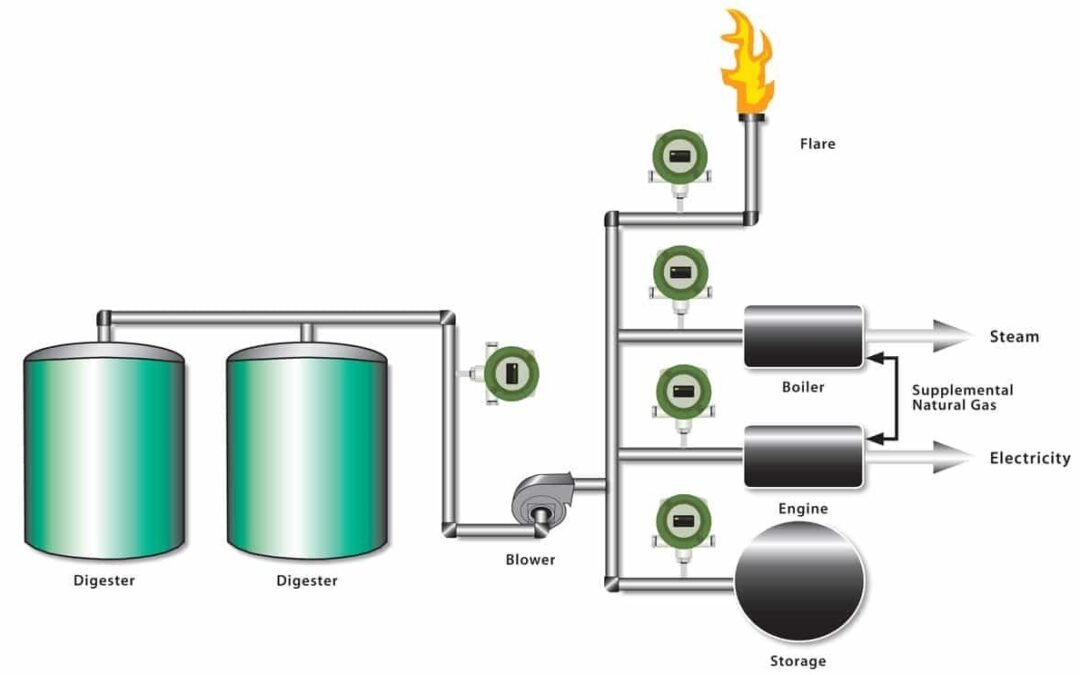
In a Compressed Biogas (CBG) plant, the anaerobic digester functions as the core process unit, where organic waste is biologically converted into biogas. The performance of this unit directly impacts how much biogas is produced, the methane percentage in the gas, the overall stability of plant operations, and the long-term operating cost of the project. Even if feedstock supply is adequate and gas upgrading systems are highly efficient, poor digester design or technology selection can lead to unstable digestion, lower gas output, frequent breakdowns, and increased maintenance costs. Therefore, the digester largely determines whether a CBG plant can run reliably for 15–20 years or suffer from recurring operational problems such as foaming, scum formation, acidification, or fluctuating gas production.
Among the various anaerobic digestion technologies available today, Continuous Stirred Tank Reactors (CSTR) and Plug Flow Digesters (PFD) are the most commonly used in CBG plants in India and across the world. Both technologies are based on the same fundamental biological process—anaerobic digestion—where microorganisms break down organic matter in the absence of oxygen to produce methane-rich biogas. However, they differ significantly in how the reactor is designed and operated. These differences include the physical shape of the digester, the way feedstock flows through the reactor, the extent of mixing provided inside the digester, and how well each system can handle different types of feedstock.
Because of these design and operational differences, CSTR and Plug Flow digesters are suitable for different project conditions. CSTR digesters are generally more flexible and stable for mixed or variable feedstock, while Plug Flow digesters are better suited for consistent, high-solids feedstock with simpler operational requirements. Understanding these differences is essential for selecting the right digester technology and ensuring long-term technical and financial success of a CBG project.
CSTR Digester
A Continuous Stirred Tank Reactor (CSTR) is a widely used anaerobic digester technology in commercial Compressed Biogas (CBG) plants due to its operational reliability and flexibility. In a CSTR system, fresh feedstock—prepared in the form of a slurry—is fed into the digester either continuously or at regular intervals. At the same time, an equivalent quantity of digested slurry (digestate) is discharged, ensuring that the reactor volume remains constant and the digestion process continues without interruption.
The defining feature of a CSTR digester is continuous or intermittent mixing, achieved through mechanical agitators, hydraulic mixing, or biogas recirculation. This mixing keeps the entire reactor contents uniformly blended, creating homogeneous conditions throughout the digester. As a result, critical process parameters such as temperature, pH, nutrient concentration, and microbial population remain consistent across the reactor volume.
Because all microorganisms experience similar environmental conditions, the biological reactions involved in anaerobic digestion proceed in a balanced and controlled manner. This homogeneity minimizes process shocks, prevents localized acid build-up, and enables stable, predictable biogas production with consistent methane concentration, which is essential for meeting CBG offtake requirements.
Advantages of CSTR Digesters
One of the biggest strengths of CSTR digesters is their high process stability. Continuous mixing prevents the settling of heavy particles at the bottom and avoids the formation of floating scum layers on the surface. This eliminates dead zones within the digester and ensures maximum utilization of the reactor volume for biogas generation.
CSTR technology is also known for its high feedstock flexibility. It can efficiently digest a wide variety of organic materials, including cattle dung, press mud, food waste, agricultural residues, poultry litter (after pre-treatment), and slaughterhouse waste. This flexibility is particularly valuable in Indian CBG projects, where feedstock composition may vary seasonally or due to supply constraints.
Another major advantage is the high level of process control achievable in CSTR systems. Operators can precisely regulate temperature, organic loading rate (OLR), hydraulic retention time (HRT), and pH, allowing quick corrective actions in case of process disturbances. This results in consistent methane yield and steady gas flow, making CSTR digesters ideal for medium to large-scale CBG plants supplying gas to Oil Marketing Companies (OMCs) under long-term offtake agreements.
Limitations of CSTR Digesters
Despite their advantages, CSTR digesters have certain limitations that must be considered during project planning. The most significant drawback is higher capital expenditure (CAPEX). The need for robust civil construction, mixing equipment, heating systems, and instrumentation increases initial project cost compared to simpler digester designs.
CSTR systems also incur higher operating expenditure (OPEX) due to continuous or frequent energy consumption for mixing and heating. Mechanical mixers require regular maintenance, and any failure can disrupt digestion and reduce gas output.
Additionally, CSTR digesters are generally less suitable for very high total solids (TS) feedstock. Feedstock with high fibrous content or high solids concentration often requires dilution with water or liquid digestate to maintain proper mixing. This increases water consumption and leads to higher digestate volumes, which may increase handling and disposal costs.
Plug Flow Digester
A Plug Flow Digester (PFD) is an anaerobic digestion system designed to treat high-solids, semi-solid organic feedstock with minimal mechanical complexity. The working principle of a Plug Flow digester is based on unidirectional movement of material, where the feedstock progresses through the reactor in a “plug-like” manner with very little back-mixing.
Structurally, a Plug Flow digester is typically a long, horizontal or gently inclined chamber, constructed using RCC or steel and often covered with a flexible gas-tight membrane. Fresh feedstock enters from the inlet end and gradually moves toward the outlet due to gravity or the pressure created by new incoming material. Unlike CSTR systems, there is no continuous agitation of the entire reactor volume.
As the material moves along the length of the digester, anaerobic digestion takes place in distinct zones. The initial section of the reactor is dominated by hydrolysis and acidogenesis, while the middle and outlet zones support acetogenesis and methanogenesis. Because the feedstock remains in the digester for a fixed hydraulic retention time, the biological reactions progress in a sequential and predictable manner.
The absence of aggressive mixing allows the natural structure of fibrous feedstock to remain intact, making Plug Flow digesters particularly suitable for substrates with high total solids content. However, this also means that temperature and microbial distribution are less uniform compared to fully mixed systems, requiring careful feedstock consistency and controlled feeding.
Advantages of Plug Flow Digesters
One of the primary advantages of Plug Flow digesters is low energy consumption. Since these systems require little or no mechanical mixing, power usage is significantly lower than in CSTR digesters. This results in reduced operating costs and makes Plug Flow technology attractive for projects with limited access to reliable electricity.
Plug Flow digesters are highly suitable for high-solids feedstock, typically in the range of 15–25% total solids. They perform well with agricultural residues, cattle manure mixed with bedding material, crop waste slurry, and fibrous biomass that would otherwise be difficult to handle in fully mixed reactors. The ability to process thick slurry without excessive dilution reduces water consumption and digestate volume.
Another key advantage is mechanical simplicity. With fewer moving parts and simpler equipment, Plug Flow digesters require less maintenance and are easier to operate. This simplicity makes them particularly suitable for rural and agri-based CBG projects, where skilled manpower and technical support may be limited.
Additionally, the gradual, staged digestion process in Plug Flow systems can provide stable biogas generation when feedstock quality is consistent. For small to medium-scale CBG plants with predictable feedstock supply, Plug Flow digesters offer a cost-effective and robust solution.
CSTR vs Plug Flow Digesters:
| Parameter | CSTR Digester | Plug Flow Digester |
| Reactor Type | Vertical, fully mixed | Horizontal, flow-through |
| Mixing | Mechanical / gas mixing | Minimal or none |
| Feedstock Flexibility | Very high | Limited |
| TS Handling | Low to medium | Medium to high |
| Process Control | Excellent | Moderate |
| Gas Yield Stability | Very high | Moderate |
| Energy Consumption | Higher | Lower |
| Maintenance | Moderate | Low |
| Best Application | Large commercial CBG plants | Rural / agri-based plants |
Technology Selection Criteria for CBG Plants
Selecting the right digester technology is a strategic decision that directly affects the technical performance, operating stability, and financial viability of a CBG plant. The choice between CSTR and Plug Flow digesters should be based on feedstock characteristics, plant capacity, operational capability, and long-term project objectives.
Choose CSTR Digester When:
Feedstock supply is mixed or variable
CSTR digesters are highly adaptable and can efficiently process multiple types of feedstock with varying composition, moisture content, and biodegradability. This makes them ideal for projects dependent on seasonal agricultural waste, mixed organic waste, or multiple suppliers where feedstock quality may fluctuate.
High methane yield consistency is required
Due to complete mixing and uniform digestion conditions, CSTR digesters deliver stable and predictable methane-rich biogas. This consistency is critical for commercial CBG plants supplying gas under long-term offtake agreements with Oil Marketing Companies (OMCs), where fluctuations in gas quality or quantity can lead to penalties.
Plant size is medium to large
CSTR technology scales well and is widely proven in medium and large CBG plants. As plant capacity increases, the benefits of better process control, operational stability, and feedstock flexibility outweigh the higher capital and operating costs associated with CSTR systems.
Skilled O&M support is available
CSTR digesters require regular monitoring, mechanical maintenance, and process optimization. Projects with access to trained operators, automation systems, and technical support teams are better suited to manage CSTR-based plants effectively over the long term.
Choose Plug Flow Digester When:
Feedstock is consistent and high in solids
Plug Flow digesters perform best when the feedstock has stable composition and higher total solids content, such as cattle manure with bedding material or agricultural residues. Consistent feedstock ensures smooth plug movement and prevents channeling or blockages.
Power consumption must be minimized
With little to no mechanical mixing, Plug Flow digesters consume significantly less energy than CSTR systems. This makes them suitable for projects located in areas with limited power availability or where reducing operating costs is a priority.
Project scale is small to medium
Plug Flow digesters are well suited for small to medium-scale CBG plants where simplicity and cost-effectiveness are more important than maximum flexibility. For such projects, the lower CAPEX and OPEX can significantly improve financial viability.
Simple operation is preferred
Due to their mechanical simplicity and fewer moving parts, Plug Flow digesters are easier to operate and maintain. This makes them ideal for rural and agri-based CBG projects where skilled manpower may be limited and operational robustness is essential.
Conclusion
The choice between CSTR and Plug Flow digesters plays a decisive role in the long-term success of a Compressed Biogas (CBG) plant. Both technologies are well-established and effective, but their performance depends on how well they align with project-specific conditions. CSTR digesters provide high process stability, superior control, and flexibility to handle mixed or variable feedstock, making them suitable for medium to large commercial plants. Plug Flow digesters, on the other hand, offer a simpler and more energy-efficient solution for projects with consistent, high-solids feedstock, particularly in rural and agri-based settings.
There is no universally superior technology; the optimal choice depends on feedstock characteristics, plant scale, power availability, and operational capability. A careful techno-economic assessment during the planning stage ensures that the selected digester technology delivers reliable biogas production, minimizes operational challenges, and supports sustainable project performance over the entire lifecycle of the CBG plant.