



Introduction
Feedstock selection is one of the most critical and decisive factors in the success of a Bio-Compressed Biogas (Bio-CBG) project. While advanced digestion technologies, efficient plant design, and assured offtake mechanisms contribute significantly to project performance, it is the quality, consistency, availability, and economics of feedstock that ultimately govern biogas yield, plant stability, operating efficiency, and long-term profitability.
Bio-CBG plants must operate continuously to remain economically viable, making uninterrupted feedstock supply a non-negotiable requirement. Factors such as moisture content, biodegradability, contamination levels, transportation distance, and pre-treatment requirements directly impact operational costs and digester health.
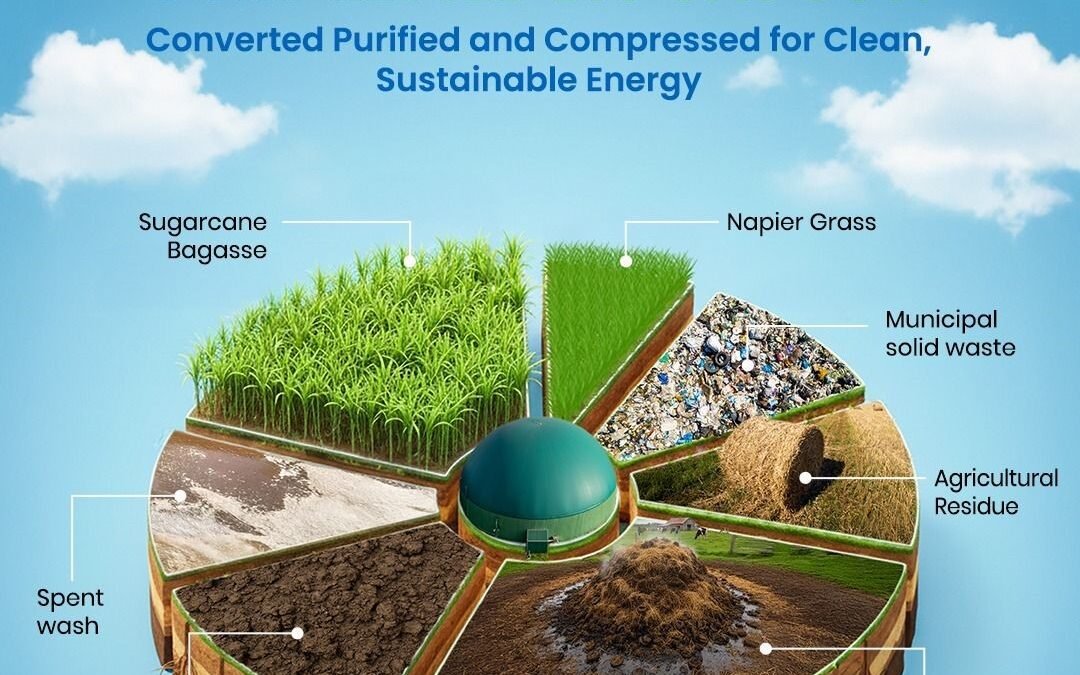
Among the wide range of organic materials available in India, agricultural waste and municipal organic waste have emerged as the two most widely adopted feedstock categories for Bio-CBG plants. Agricultural waste—including crop residues, cattle dung, press mud, and agro-industrial by-products—offers strong rural integration and cleaner feedstock streams. On the other hand, municipal organic waste—such as food waste, market waste, and segregated household waste—presents an opportunity to address urban waste management challenges while ensuring year-round feedstock availability.
However, each feedstock category comes with its own set of advantages, limitations, and operational challenges. Their suitability depends on multiple parameters, including project location (urban vs rural), plant scale, feedstock logistics, regulatory compliance, community acceptance, digestate utilization strategy, and EPC execution capability. Choosing the right feedstock is therefore not a binary decision, but a strategic alignment of technical feasibility, economic viability, and sustainability objectives.
Understanding Feedstock in Bio-CBG Plants
In Bio-Compressed Biogas (Bio-CBG) plants, feedstock forms the foundation of the entire value chain. Feedstock refers to the organic raw material that undergoes anaerobic digestion to generate biogas, which is subsequently purified and upgraded to Bio-CBG quality suitable for compression, storage, and use as a clean fuel. The nature of this raw material directly determines not only the volume of gas produced but also the reliability, efficiency, and financial sustainability of the plant.
Unlike conventional energy projects where fuel quality is standardized, Bio-CBG projects operate with biologically active inputs. This makes feedstock behavior dynamic and highly sensitive to variations in composition, moisture content, biodegradability, and contamination levels. Even small fluctuations in feedstock quality can have a significant impact on microbial activity inside the digester, affecting gas yield and process stability.
Impact of Feedstock on Biogas Yield and Methane Concentration
Different organic materials possess varying levels of volatile solids, carbon-to-nitrogen (C/N) ratios, and biodegradability. Feedstocks rich in easily digestible organic matter generally produce higher biogas volumes and higher methane concentrations. In contrast, fibrous or contaminated materials may require extensive pre-treatment and still deliver lower gas yields. Therefore, understanding the biochemical characteristics of feedstock is essential for accurate yield estimation and plant sizing.
Influence on Digester Stability and Microbial Health
Anaerobic digestion relies on a delicate balance of microbial populations. Irregular feedstock supply, sudden changes in composition, or the presence of inhibitory substances can disrupt this balance, leading to issues such as acidification, foaming, or digester souring. Stable, predictable feedstock ensures consistent microbial activity, smoother plant operation, and reduced risk of shutdowns or performance drops.
Effect on Pre-Treatment and Operational Costs
Feedstock characteristics also dictate the extent of pre-treatment required before digestion. Materials with high levels of impurities—such as plastics, sand, or stones—demand advanced segregation, shredding, and cleaning systems, increasing both capital and operating costs. Cleaner and more uniform feedstock reduces mechanical wear, energy consumption, and manpower requirements, directly improving operating margins.
Role in Digestate Quality and Marketability
The digestate generated after biogas production is a valuable by-product, often marketed as bio-manure. Feedstock quality directly affects nutrient content, pathogen load, and contamination levels in the digestate. Plants using well-characterized and uncontaminated feedstock produce higher-quality bio-manure with better acceptance among farmers and higher market value, strengthening the project’s revenue stream.
Impact on Overall Project Economics
From feedstock procurement and transportation to digester performance and digestate sales, feedstock influences every cost and revenue component of a Bio-CBG project. Reliable, low-cost, and locally available feedstock reduces supply risk and logistics expenses, while improving plant uptime and gas output. Conversely, poor feedstock planning can lead to frequent operational disruptions, higher O&M costs, and lower return on investment.
Feedstock Selection as a Strategic Decision
Selecting the right feedstock is therefore not a one-time technical choice, but a continuous strategic planning exercise. It requires a holistic assessment of availability, seasonality, supply chain reliability, regulatory considerations, and long-term sustainability. Successful Bio-CBG projects treat feedstock management as an integrated function—combining technical analysis, logistics planning, stakeholder engagement, and risk mitigation—to ensure stable operations and long-term viability.
Agricultural Waste as Feedstock for Bio-CBG
Types of Agricultural Waste
Agricultural waste includes residues and by-products generated from farming and agro-industrial activities, such as:
- Paddy straw, wheat straw, maize stalks
- Sugarcane trash and press mud
- Crop husk, chaff, and silage
- Cattle dung and poultry litter
Advantages of Agricultural Waste
- Abundant Availability in Rural India
India generates millions of tonnes of agricultural residue annually, much of which is underutilized or openly burned. Bio-CBG plants provide a sustainable outlet for this biomass. - High Biogas Potential (with Proper Pre-treatment)
Feedstocks like press mud, silage, and cattle dung offer good methane yields when managed properly. - Lower Contamination Risk
Agricultural waste is generally free from plastics, metals, and hazardous materials, reducing pre-treatment complexity. - Strong Rural Integration
Use of farm waste creates additional income streams for farmers and supports rural employment.
Challenges of Agricultural Waste
- Seasonal availability and supply fluctuations
- High lignocellulosic content requiring pre-treatment
- Storage and logistics during off-season
- Dependence on farmer participation and aggregation systems
Municipal Organic Waste as Feedstock for Bio-CBG
Types of Municipal Waste
Municipal waste used in Bio-CBG plants primarily consists of the organic fraction of municipal solid waste (OFMSW), including:
- Kitchen and food waste
- Vegetable and fruit market waste
- Slaughterhouse waste
- Sewage sludge
Advantages of Municipal Waste
- Continuous Year-Round Availability
Urban areas generate municipal waste daily, ensuring consistent feedstock supply. - High Biodegradability
Food and kitchen waste are easily digestible, leading to faster biogas production and higher methane yields. - Urban Waste Management Solution
Bio-CBG plants help municipalities reduce landfill burden and comply with Solid Waste Management Rules. - Tipping Fee Potential
In some cases, municipalities pay gate fees for waste processing, improving project economics.
Challenges of Municipal Waste
- High contamination with plastics and inerts
- Extensive segregation and pre-treatment requirements
- Odor management and public acceptance issues
- Regulatory complexity and dependency on municipal bodies
Comparative Analysis: Agricultural vs Municipal Waste
| Parameter | Agricultural Waste | Municipal Organic Waste |
| Availability | Seasonal | Year-round |
| Contamination Risk | Low | High |
| Pre-treatment Need | Medium–High | High |
| Methane Yield | Moderate | High |
| Supply Reliability | Variable | Stable |
| Social Impact | High (Farmer income) | High (Urban sanitation) |
| Regulatory Complexity | Low–Medium | High |
Impact on Digester Performance
- Agricultural waste offers stable digestion when properly pre-treated but may show slower gas generation.
- Municipal waste delivers rapid digestion but requires tight process control to manage variability and contamination.
Which Feedstock is Better for Bio-CBG?
There is no single feedstock that can be universally defined as “better” for all Bio-CBG projects. The suitability of feedstock is highly project-specific and must be evaluated in the context of location, logistics, regulatory framework, plant design, and long-term operational strategy. A feedstock that performs exceptionally well in one region or business model may prove challenging in another.
Role of Project Location
Project geography plays a decisive role in feedstock selection. Agricultural waste is typically more suitable for rural or semi-rural locations where crop residues, animal dung, and agro-processing by-products are readily available and can be sourced within short transportation distances. In contrast, municipal organic waste aligns better with urban or peri-urban projects where city waste streams can be leveraged as part of integrated solid waste management initiatives.
Feedstock Logistics and Availability
Consistent and predictable feedstock supply is essential for stable plant operation. Agricultural residues may be seasonal, requiring careful planning, storage infrastructure, and farmer engagement models. Municipal waste, while available year-round, often faces challenges related to segregation quality, contamination, and variability in organic content. Projects must assess not just quantity but also reliability and consistency of supply over the plant’s lifecycle.
Regulatory and Policy Considerations
The regulatory environment significantly influences feedstock choice. Municipal waste-based plants often operate under municipal contracts and compliance frameworks related to waste handling, tipping fees, and environmental clearances. Agricultural waste-based projects, on the other hand, may benefit from government incentives, farmer support schemes, and easier digestate acceptance in agricultural markets. Alignment with local policies and statutory requirements is therefore critical.
Digestate Utilization and Market Access
Digestate management is a key revenue and sustainability component. Agricultural waste typically produces digestate that is more readily accepted by farmers due to lower contamination risks and better nutrient perception. Digestate derived from municipal waste may require additional treatment, certification, and quality assurance to gain market acceptance, especially for agricultural application.
EPC Design and Technology Capability
The choice of feedstock must also match the technical capability of the EPC provider. Municipal waste demands robust pre-treatment systems, advanced segregation, and contamination-resistant digesters. Agricultural waste systems focus more on handling fibrous biomass, storage, and slurry management. EPC experience in managing feedstock-specific risks often determines long-term plant reliability.
Conclusion
Feedstock selection is the cornerstone of a successful Bio-CBG project, influencing everything from biogas yield and plant stability to operating costs and long-term profitability. There is no one-size-fits-all answer when it comes to choosing between agricultural waste and municipal organic waste. Each feedstock category offers distinct advantages and challenges that must be evaluated in relation to project location, supply chain reliability, regulatory requirements, and digestate utilization strategy.
Agricultural waste-based Bio-CBG plants manufacturers in India are well suited for rural and agro-centric regions, where strong farmer linkages, cleaner feedstock, and easier digestate acceptance support stable operations. Municipal waste-based projects, on the other hand, play a vital role in urban waste management and circular economy initiatives, though they require robust pre-treatment systems and stronger operational control.