



Introduction: The Rising Importance of CBG in India’s Energy Landscape
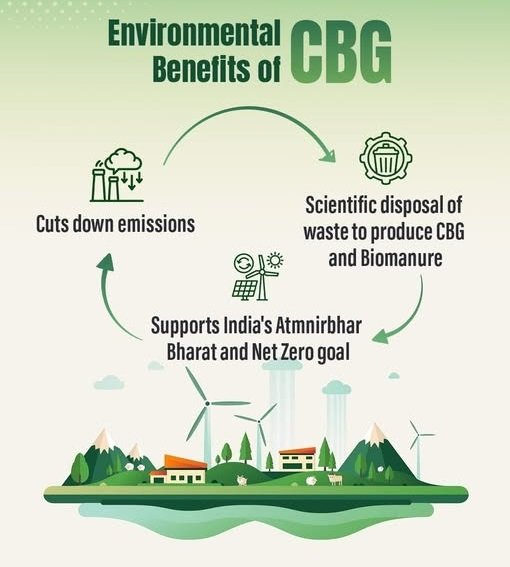
In recent years, Compressed Biogas (CBG) has emerged as one of the most promising renewable energy sources capable of transforming India’s energy sector. With the increasing pressure on industries to reduce carbon emissions, improve energy efficiency, and adopt circular economy models, CBG offers an environmentally friendly, economically viable, and technologically scalable solution. The Government of India’s SATAT (Sustainable Alternative Towards Affordable Transportation) initiative has further accelerated the demand for modern CBG plants by creating a stable market for biogas-based fuels.
Modern CBG plants are no longer simple anaerobic digestion units producing low-grade biogas. Instead, they have evolved into highly engineered, digitally controlled, process-optimized facilities capable of transforming agricultural waste, industrial effluents, press mud, cow dung, municipal waste, and biomass into high-purity fuels. This transformation has been made possible due to breakthrough technological innovations across feedstock handling, digestion, purification, automation, storage, and distribution.
Today, CBG plants integrate IoT, AI, high-efficiency digesters, advanced gas cleaning technologies, feedstock pretreatment methods, and state-of-the-art upgradation units to deliver consistent methane purity of 92%–98%, meeting stringent automotive and industrial fuel standards.
Feedstock Pre-Processing Innovations
Advanced Biomass Crushing, Shredding & Size Reduction
Modern CBG plants depend heavily on the quality of feedstock preparation. Uniform particle size enhances microbial digestion, increases surface area, and improves gas yield. Today’s plants use high-torque shredders, biomass crushers, hammer mills, and fiber separators designed specifically for agricultural residues like paddy straw, maize stalk, press mud, sugarcane trash, and napier grass.
These machines feature variable-speed drives, anti-jamming sensors, and dust extraction systems, improving operational stability. Enhanced pre-processing ensures faster hydrolysis, higher feedstock conversion, and reduced retention time in digesters.
Thermal, Alkaline & Steam Explosion Pretreatment
Certain feedstocks (paddy straw, cotton stalk, lignocellulosic biomass) have low digestibility. To improve biogas yield, modern plants use:
- Steam Explosion Units to break lignin barriers
- Alkaline Pretreatment Systems to soften fiber structures
- Thermal Hydrolysis Reactors to improve biodegradability
These technologies increase gas yields by 20–40% and make previously difficult feedstocks commercially viable for digestion.
High-Efficiency Anaerobic Digestion Systems
Continuous Stirred Tank Reactors (CSTR)
CSTRs are now widely preferred due to their consistent mixing, temperature uniformity, and ability to handle diverse feedstocks. Modern digesters come with:
- Automated agitators with energy-efficient motors
- Internal heating coils for uniform temperature control
- High-strength corrosion-resistant materials like FRP and coated steel
- Gas-tight double membrane domes ensuring 100% leak-proof operation
Their design enables stable digestion under thermophilic and mesophilic conditions.
Plug Flow Digesters
These digesters are designed for high-solids feedstocks such as cow dung and press mud. Innovations include:
- Hydraulic piston feeding systems
- Anti-sedimentation flow channels
- Optimized length-to-width ratio for controlled residence time
They reduce clogging issues and improve digestion efficiency.
Two-Stage Digestion Systems
Modern plants increasingly adopt two-stage digesters:
- Stage 1: Hydrolysis & acidogenesis
- Stage 2: Methanogenesis
This separation results in:
Higher methane yield
Greater process stability
Reduced risk of ammonia inhibition
Breakthroughs in Biogas Purification & Upgrading Technologies
Water Scrubbing Technology
This is a widely adopted technology where CO₂ and H₂S are dissolved in water while methane remains unabsorbed. Modern units feature:
- Multi-stage high-pressure absorbers
- Closed-loop water recycling
- Energy-efficient pumps and demisters
They produce CBG with methane purity of 95–98%.
PSA (Pressure Swing Adsorption)
A highly advanced technology using adsorbent materials to remove CO₂ and impurities. Latest PSA systems offer:
- Twin-tower adsorption cycles
- High-capacity molecular sieves
- Advanced pressure equalization for low energy use
PSA units provide consistent methane purity and are ideal for medium- to large-scale plants.
Membrane-Based Upgradation
Using polymer membranes, these systems separate methane and CO₂ based on molecular size. Innovations include:
- Three-stage membrane cascades
- Anti-fouling coatings
- High-pressure compressors
These are compact, modular, cost-effective, and suitable for decentralized CBG units.
Biological Upgradation of Biogas
In biological upgradation, microorganisms convert CO₂ present in biogas into CH₄ (methane) using hydrogen (H₂) or other biological pathways.
Raw biogas typically contains:
- 55–65% Methane (CH₄)
- 35–45% Carbon dioxide (CO₂)
- Trace gases (H₂S, moisture, siloxanes)
Biological upgradation increases methane to 90–98%, suitable for CBG production.
Types of Biological Upgradation Techniques
Biological upgradation mainly has three primary methods:
2.1 In-Situ Biological Upgradation
(Methanation happens inside the digester itself)
2.2 Ex-Situ Biological Upgradation
(Biological conversion happens outside the digester in a separate reactor)
In-Situ Biological Upgradation
(CO₂ conversion inside the digester)
In this technique, hydrogen gas (H₂) is injected directly into the anaerobic digester. Inside the digester, methanogenic microorganisms perform this reaction:
CO₂ + 4H₂ → CH₄ + 2H₂O
This reaction is known as hydrogenotrophic methanogenesis.
Key Points:
- H₂ is supplied through pipes and diffusers at the bottom of the digester.
- Methanogens naturally present in the digester convert CO₂ into methane.
- Methane percentage increases without external upgrading systems.
Advantages:
✔ Simple system
✔ Lower cost
✔ Reduced CO₂ in final gas
✔ Less requirement of secondary purification units
Challenges:
- H₂ has low solubility in water → needs efficient mixing
- Requires precise control of H₂ injection
- Risk of digester destabilization if too much H₂ is added
Best suited for small to medium CBG plants.
Ex-Situ Biological Upgradation
(Biological conversion in an external reactor)
In ex-situ upgradation, raw biogas is taken from the digester and sent to a separate external bioreactor. This reactor contains highly active hydrogenotrophic methanogens.
Here, both biogas (CO₂) and hydrogen (H₂) are mixed under controlled conditions, allowing microbes to convert CO₂ → CH₄.
Key Features:
- Independent control over temperature, pH, pressure
- Higher biomass concentration
- Faster and more efficient methanation
Benefits:
Higher methane yield
96–98% CH₄ purity achievable
No impact on main digester stability
External reactor can be optimized separately
Technologies used:
- Fixed-bed bioreactors
- Trickle-bed reactors
- Bubble column reactors
- Biofilm-based reactors
This is ideal for large-scale commercial CBG plants looking for high purity.
Conclusion
Biological upgradation techniques are rapidly transforming the way CBG plants operate, offering a breakthrough approach that is both scientifically advanced and economically viable. Unlike conventional upgrading systems such as PSA, membranes, or chemical scrubbing—which merely remove CO₂—biological upgradation uniquely converts CO₂ into value, creating additional methane through natural microbial processes. This results in significantly higher fuel output from the same amount of feedstock, improving plant efficiency and profitability.
In an era where industries are shifting towards decarbonization, circular economy models, and renewable energy integration, biological upgradation stands out for its exceptional alignment with these goals. By using hydrogenotrophic methanogens, these systems promote a carbon-neutral approach where CO₂ becomes a raw material rather than a waste product. This not only reduces greenhouse gas emissions but also minimizes operational footprints, making CBG plants more environmentally responsible.
Moreover, as India moves aggressively toward energy independence, supported by SATAT, National Green Hydrogen Mission, and waste-to-energy initiatives, biological upgradation offers unmatched scalability and future readiness. The technology can easily integrate with green hydrogen production, enabling hybrid CBG-H₂ systems that will define the next generation of renewable fuel plants. Its compatibility with digital monitoring, AI-based optimization, and advanced reactor designs further strengthens its position as a core future technology.
While a few challenges remain—such as hydrogen supply and precise microbial control—the rapid technological advancements in bioreactors, mixing strategies, and microbial engineering are steadily minimizing these limitations. With ongoing research, improved reactor designs, and lower hydrogen production costs, biological upgrading is expected to become one of the most cost-efficient and sustainable CBG upgrading methods worldwide.
In conclusion, biological upgradation is not just an alternative method—it is the future pathway for high-purity methane production. Offering environmental benefits, higher methane yield, lower energy consumption, and long-term economic advantages, it paves the way for CBG plants to evolve into fully integrated, smart, and climate-friendly renewable fuel systems. As India and the world continue prioritizing clean energy transitions, biological upgradation will undoubtedly play a central and transformative role in shaping the renewable fuel landscape of the next decade.