



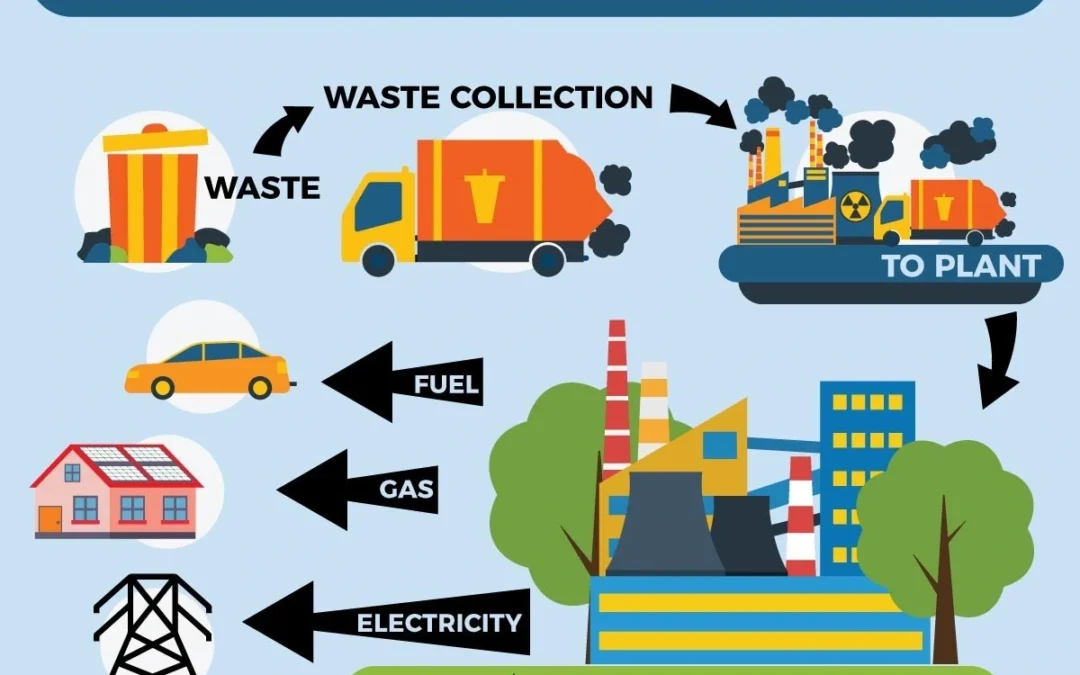
Introduction – The Growing Waste Management Challenge
India is experiencing rapid urbanization, industrial growth, and population expansion. These developments, while vital for economic progress, have created one of the biggest environmental challenges of our time — waste management. Every day, India generates over 160,000 tonnes of municipal solid waste (MSW), of which only about 25–30% is processed scientifically. The rest either ends up in open landfills, roadside dumps, or water bodies.
This unmanaged waste is not just an eyesore; it is an environmental and health hazard. Decomposing waste releases methane — a greenhouse gas far more potent than carbon dioxide — and contributes significantly to climate change. In addition, overflowing landfills leach toxic chemicals into the soil and groundwater, while burning of waste releases carcinogenic fumes into the air.
The issue is particularly severe in urban areas like Delhi, Mumbai, and Chennai, where landfill sites have grown into mountains of garbage. Addressing this crisis requires innovative, sustainable solutions that treat waste as a resource rather than a burden. This is where the Waste-to-Energy (WtE) concept, particularly through Compressed Biogas (CBG) plants, plays a transformative role.
Understanding the Waste-to-Energy Concept
The idea of Waste-to-Energy revolves around extracting usable energy — in the form of electricity, heat, or fuel — from different types of waste materials. Instead of sending waste to landfills, technologies such as incineration, gasification, pyrolysis, and anaerobic digestion convert waste into valuable energy.
Among these, anaerobic digestion has gained prominence for handling organic and biodegradable waste. It is an eco-friendly biological process that decomposes organic matter in the absence of oxygen, producing biogas rich in methane (CH₄) and carbon dioxide (CO₂). When purified, compressed, and upgraded to natural gas quality, this gas becomes Compressed Biogas (CBG) — a clean, renewable, and high-energy fuel that can directly substitute for fossil-based fuels like CNG or LPG.
Thus, the Waste to Energy model based on anaerobic digestion not only solves the waste disposal problem but also contributes to the renewable energy mix — creating a closed-loop, circular economy where waste becomes raw material for energy generation.
The Scale and Nature of India’s Waste Problem
India’s waste composition is unique: nearly 50–60% of municipal waste is organic and biodegradable. This includes food scraps, vegetable peels, market waste, crop residues, and animal dung. However, due to poor segregation practices, this organic portion often gets mixed with plastics, glass, and metals — making it difficult to process.
Landfills across India are overflowing. The Ghazipur landfill in Delhi, for example, has grown over 65 meters high — almost as tall as the Qutub Minar — symbolizing the scale of the problem. These landfills continuously emit methane and carbon dioxide, contributing to urban air pollution and global warming. They also attract rodents, flies, and mosquitoes, leading to outbreaks of vector-borne diseases.
Additionally, farmers in northern India often resort to burning agricultural residue (stubble burning) after harvest due to lack of disposal options, releasing vast amounts of particulate matter (PM2.5 and PM10) into the air. This practice alone contributes to severe smog and respiratory issues every winter.
All these challenges underline one truth: India needs a decentralized, sustainable waste management strategy that not only processes waste efficiently but also adds value to it — and CBG plants are at the center of this transformation.
CBG Plants as a Waste-to-Energy Solution
CBG plants provide an effective, scalable, and sustainable solution for managing organic waste. They are designed to collect and process organic materials such as municipal food waste, cow dung, sugar mill waste, press mud, poultry litter, or agricultural residues. The process of anaerobic digestion breaks down this organic matter into two valuable products — biogas and digestate.
- Biogas Generation:
In an oxygen-free environment, bacteria decompose organic matter and release a mixture of gases — primarily methane (50–60%) and carbon dioxide. This gas is then purified to remove moisture, hydrogen sulfide, and carbon dioxide, leaving behind high-purity methane gas. Once compressed, this becomes Compressed Biogas (CBG), suitable for use in vehicles, industries, and domestic energy systems. - Organic Fertilizer Production:
The residual slurry, known as digestate, is rich in organic carbon, nitrogen, phosphorus, and potassium — essential nutrients for plants. This can be dried and used as bio-fertilizer, which improves soil health and reduces dependence on chemical fertilizers.
In this way, a CBG plant converts waste that would otherwise pollute the environment into clean energy and valuable agricultural inputs — creating a zero-waste ecosystem.
Environmental Benefits of Waste-to-Energy via CBG Plants
CBG-based Waste-to-Energy systems offer several environmental advantages:
- Reduction of Greenhouse Gas Emissions:
Methane generated from decaying organic matter in landfills is captured and utilized in CBG plants, preventing its release into the atmosphere. This directly reduces the overall carbon footprint. - Elimination of Open Dumping and Burning:
By processing agricultural waste and municipal organic waste, CBG plants prevent open dumping and stubble burning — both major sources of urban pollution and smog. - Cleaner Air and Soil:
With less open burning and leachate, the air becomes cleaner and soil contamination decreases. Organic fertilizers produced by CBG plants also rejuvenate soil quality by adding essential nutrients and microorganisms. - Waste Diversion from Landfills:
Each tonne of waste processed by a CBG plant reduces landfill volume, conserves land, and minimizes groundwater pollution from leachate seepage.
Thus, the environmental contribution of these plants is twofold — mitigating pollution and promoting renewable energy simultaneously.
Economic and Social Impact of CBG-Based Waste Management
Beyond environmental gains, CBG plants deliver significant economic and social benefits:
- Employment Generation:
The entire value chain — from waste collection and segregation to biogas production and fertilizer distribution — creates jobs for both skilled and unskilled workers, particularly in rural areas. - Energy Security and Import Reduction:
India imports a substantial portion of its natural gas. CBG can replace part of this import, saving foreign exchange and strengthening national energy security. - Income for Farmers and Local Bodies:
Farmers can supply crop residues, cow dung, or sugarcane waste to nearby CBG plants, earning additional income. Similarly, municipal bodies can generate revenue by supplying segregated organic waste. - Support to Sustainable Agriculture:
The bio-fertilizer from digestate enhances soil fertility, reducing dependence on costly chemical fertilizers and promoting eco-friendly farming.
These combined benefits make CBG projects financially viable and socially inclusive, improving livelihoods while supporting the national green energy mission.
Government Support and Policy Framework
The Indian government recognizes the strategic importance of CBG plants under its Waste-to-Wealth and Clean Energy missions. The most significant policy initiative is the SATAT Scheme (Sustainable Alternative Towards Affordable Transportation) launched in 2018.
Under SATAT:
- The government targets the establishment of over 5,000 CBG plants across India.
- Oil marketing companies (OMCs) like IOCL, BPCL, and HPCL have committed to procuring CBG from producers under long-term purchase agreements.
- Entrepreneurs receive support in the form of assured offtake, viability gap funding, and access to green finance.
Apart from SATAT, other initiatives like Swachh Bharat Mission, GOBAR-Dhan Scheme, and National Bioenergy Programme also promote waste utilization through biogas and organic fertilizer generation. Together, these policies are driving India’s transition from linear waste disposal to circular waste utilization.
Challenges in Implementation and the Way Forward
While the potential of CBG-based Waste-to-Energy systems is immense, their successful implementation across India faces several real-world challenges. These challenges arise due to gaps in infrastructure, policy execution, public awareness, and technical expertise. Understanding and addressing these barriers is crucial for achieving the large-scale transformation envisioned under national programs like SATAT and GOBAR-Dhan .
1. Lack of Waste Segregation at Source
The most fundamental challenge is improper segregation of waste. In most Indian cities and rural areas, household and municipal waste is not separated into biodegradable and non-biodegradable categories. This leads to contamination of organic waste with plastics, metals, and other inert materials, making it unsuitable for anaerobic digestion.
Segregation at source is critical for CBG plants because impure feedstock affects microbial digestion efficiency, reduces gas yield, and increases operational costs. To overcome this, strong public awareness campaigns, community-level collection systems, and strict municipal enforcement are needed to ensure clean, segregated organic waste supply.
2. Feedstock Availability and Consistency
CBG production depends heavily on a steady and reliable supply of feedstock such as kitchen waste, animal dung, or agricultural residues. However, in many regions, the availability of such feedstock is seasonal and inconsistent. For example, crop residues are available mainly after harvest, while municipal waste collection can fluctuate.
Furthermore, competition for organic waste — for composting, animal feed, or biomass power — can also create supply constraints. To maintain continuous operation, CBG plants need long-term supply agreements with municipalities, farmers, and food industries. Developing feedstock management strategies and establishing local waste collection centers are key steps to address this issue.
3. High Initial Capital Investment
Setting up a CBG plant involves substantial capital expenditure, especially for biogas digesters, purification systems, compressors, and storage units. Even though government schemes like SATAT offer financial incentives and long-term purchase agreements, small and medium entrepreneurs often struggle to arrange upfront investment or secure loans.
Banks and financial institutions remain cautious due to limited understanding of the technology and uncertainty in payback periods. To overcome this, greater financial literacy, flexible funding mechanisms, and public-private partnerships (PPP) are needed. Soft loans, capital subsidies, and viability gap funding can help make projects financially viable and attractive to private investors.
4. Technical and Operational Challenges
Operating a CBG plant requires expertise in microbiology, chemical processing, and gas upgrading technologies. Many projects face difficulties due to poor technical design, inadequate maintenance, or untrained staff, which leads to reduced biogas output or equipment failure. Issues such as incorrect feedstock mixing ratio, temperature fluctuations in digesters, or inefficient purification units can hamper performance. Regular monitoring, skilled manpower, and technology standardization are essential to ensure smooth operations. Establishing training centers and technical support units can help build capacity among local operators and entrepreneurs.
Conclusion – CBG Plants: The Future of Sustainable Waste Management
The Waste-to-Energy model, particularly through Compressed Biogas (CBG) plants, represents one of the most promising pathways toward sustainable waste management and renewable energy generation. It is not merely a technological innovation but a transformational shift in how society views waste — from a problem to be discarded, to a resource to be harnessed.
CBG plants demonstrate the true essence of a circular economy. They take in organic waste that would otherwise rot in landfills or be burnt in fields, and convert it into valuable clean fuel and organic fertilizer. This single process addresses several critical challenges simultaneously — waste disposal, air pollution, soil degradation, and fossil fuel dependence. By capturing methane from decomposing waste, these plants prevent harmful greenhouse gas emissions, directly contributing to climate change mitigation and cleaner air quality.
On the policy front, initiatives like SATAT (Sustainable Alternative Towards Affordable Transportation), GOBAR-Dhan, and Swachh Bharat Mission have laid a robust foundation for large-scale deployment of CBG plants. The involvement of oil marketing companies in long-term CBG offtake ensures financial viability for investors and entrepreneurs, encouraging wider adoption. With better waste segregation practices, stronger public-private partnerships, and awareness programs, India can soon achieve a nationwide network of CBG-based Waste-to-Energy systems.
In essence, CBG plants are the bridge between waste management and energy sustainability. They close the loop of consumption, reduce carbon emissions, generate green energy, and promote inclusive growth. As India continues its journey toward net-zero emissions and a circular economy, scaling up Waste-to-Energy initiatives will be crucial.
The vision is clear — a future where every city, town, and village transforms its organic waste into renewable energy and fertilizer, ensuring that nothing is wasted. Through the widespread adoption of CBG plants, India can truly turn its waste crisis into a green revolution, achieving cleaner cities, empowered rural economies, and a more sustainable planet for generations to come.